Researchers in Professor Shoaran's group (EPFL) have developed an implantable neural chip, called LogSync, which tracks communication between different brain regions to identify cognitive and emotional states in real time. This advance overcomes the limitations of existing deep brain stimulation (DBS) systems, which often operate in open loop and rely on signals from a single brain region. This new system is based on the hypothesis that psychiatric disorders may result from disruptions in communication between brain regions rather than from dysfunction in an isolated area. LogSync records brain activity and extracts biomarkers related to brain wave intensity and synchronization between different regions. A machine learning algorithm then analyzes these biomarkers to distinguish between cognitive and emotional states, triggering stimulation when specific states are detected.
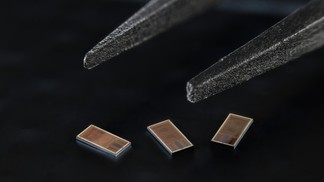
The LogSync chip, measuring approximately 4 × 2 mm, was developed with low power consumption in mind, operating at less than 200 microwatts. This was achieved through the combined design of algorithms and hardware to meet the constraints of an implantable system. The chip uses logarithmic calculations to simplify the complex operations required for real-time biomarker extraction and decoding. Initial validation of LogSync involved human brain recordings from psychiatric experiments and further testing in rats, demonstrating its ability to track oscillations and generate stimulation triggers. While initially focused on psychiatric applications, this technology's ability to extract biomarkers from the brain network for precise stimulation synchronization has broader implications for next-generation neurotechnology, including adaptive deep brain stimulation (DBS) for movement disorders and non-invasive stimulation methods.
source:
https://actu.epfl.ch/news/neural-chip-decodes-interactions-between-brain-r-2