AI and data science
AI and data science play a vital role in accelerating neuroscience research and healthcare innovation. By combining computing power with rich biological and behavioral data, researchers are developing new ways to analyze the brain and understand its disorders.
Advanced computational methods—such as machine learning, deep learning, artificial intelligence, and statistical modeling—make it possible to reveal hidden patterns in complex datasets: neuroimaging, electrophysiology, genomics, clinical records, or behavioral data from real-world settings. These approaches support the creation of more accurate models of brain function and more robust predictions of disease progression.
The Clinical and translational applications are at the heart of this work. AI-based tools make it possible to improve diagnostic systems, detect neurological and psychiatric disorders earlier, and design personalized treatment strategies. By integrating various data sources, researchers develop individual patient profiles that guide targeted interventions.
Working closely with neuroscientists, clinicians, and engineers, the AI and data science teams at Campus Biotech are strengthening a multidisciplinary ecosystem. Their innovations provide powerful computational solutions and open new perspectives on brain mechanisms and the challenges of modern neuroscience.


Dimitri Van De Ville
Full Professor, EPFL, STI INX, Head CIBM SP EPFL-UNIGE Connectomic Imaging Section


Our impact

Patient-centric medical data management platform
Added value for the patient: All imaging and medical examination results accessible in one place. Access rights managed directly by the patient...

Persistent cognitive deficits after COVID-19
Assessment of post-COVID cognitive impairment: Link between cognition, brain MRI, and immune markers over time. Previous follow-ups have shown that...

Nutritional monitoring by AI
Take a picture, recognize, understand. MyFoodRepo uses deep learning to identify food from photos taken with a smartphone. Users photograph...
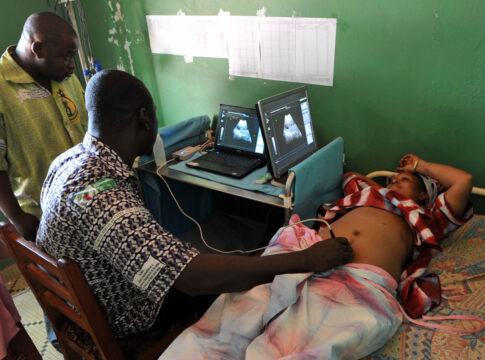
Does telehealth improve equitable access to care?
Methodology: Telemedicine is deployed in stages so that each site serves as a control. We compare the before/after periods within the sites and...

From data to decisions: the Implementome
Knowledge Engineering At the heart of the Implementome lies a formal knowledge model that defines the entities (projects, technologies, stakeholders, outcomes, contexts), their...

Reverse engineering the brain
Creating Computational Replicas: Researchers are using deep learning—the technology behind modern AI—to build artificial neural networks that...
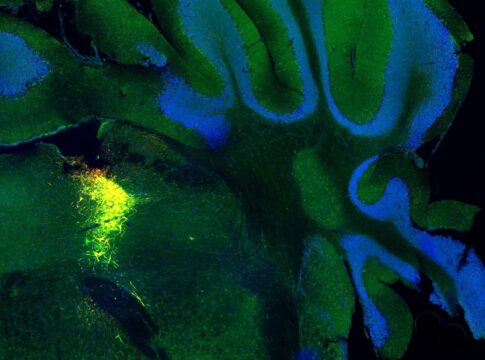
Decoding brain activity waves
How we identified the mechanism: We used a technique called "optogenetics," which uses light pulses to selectively activate the locus...

NeuroMetrics
NeuroMetrics' integrated multimodal UX assessment combines electroencephalography (EEG), electromyography (EMG), electrocardiography (ECG), and video-based measurements such as rate analysis...

CliniDocAssistant
Evaluating LLMs for Information Retrieval in DMEs: New deep learning language models, or LLMs similar to ChatGPT, have generated...

Semantic treasure map
Diving into the data lake: Unifying data with a harmonized semantic representation. Clinical data often lacks context, uses multiple models...

What kind of transparency in AI do we want?
Turning transparency into action: The XpliCAI project brings together hospital staff, patients, and partners to define transparency from a...
News

AI in the service of visual prostheses
Researchers at EPFL in Professor Martin Schrimpf's group are advancing the development of AI models that could enable visual prostheses to restore meaningful object vision for blind people. The research, conducted by the NeuroAI Lab, focuses on using AI to predict where...

Medical AI put to the test in real-world situations
Artificial intelligence (AI) is increasingly being integrated into the medical field, offering capabilities for continuous data analysis, image interpretation, and administrative task management. These advances are improving the diagnosis, treatment, and prevention of diseases. For example, in the United Kingdom, a clinical trial of...

Researchers at EPFL have succeeded in mimicking dyslexia in...
Researchers at EPFL have succeeded in modeling dyslexia using advanced AI models that integrate both vision and language processing. Dyslexia, a common learning disability that affects reading, spelling, and writing, affects up to 20% of the world's population.