Our impact

HomeKnowledge as a reward

Knowledge as a reward

How curiosity and rewards share the same brain mechanisms

Human beings are naturally driven by a desire for knowledge and discovery, whether it's catching up on the news or exploring topics that pique our interest. This desire is fueled by curiosity, a key emotion that compels us to seek information even when it requires effort or offers no immediate benefit.

Acquiring new information can be rewarding in itself. This suggests that curiosity may rely on psychological and brain processes similar to those involved in more traditional rewards, such as pleasant smells or money. Understanding these mechanisms can also help to better understand mental health disorders related to reward processing, including compulsive reward seeking.

As part of this project, we seek to determine whether the brain responds to interesting knowledge in the same way that it responds to pleasant smells (primary rewards) and financial rewards (secondary rewards).


Comparison of different types of rewards

  • Participants take part in a task that includes three types of rewards, of high or low value:
    – answers to general knowledge questions that arouse strong or weak curiosity (epistemic rewards),
    – pleasant or moderately pleasant smells (olfactory rewards),
    – more or less significant sums of money (monetary rewards).
  • Before each reward is received, a signal indicates to the participants which reward they can win.
  • This allows us to study how the brain reacts both during the anticipation and the experience of each reward.

Measuring and predicting brain responses

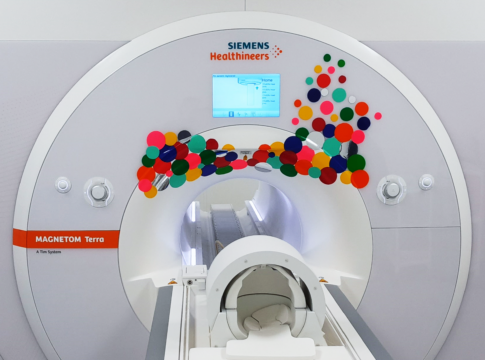
  • The task is performed while participants undergo brain imaging (fMRI). We seek to determine whether anticipating and acquiring interesting knowledge activates reward-related brain regions similar to those activated by pleasant smells and money.
  • Using advanced analytical methods, we are checking whether the patterns of brain activity observed in response to pleasant smells and money can predict brain reactions to interesting knowledge, and vice versa.
  • The discovery of common brain responses would suggest that curiosity works according to mechanisms similar to those of other forms of reward.

Why are the links between curiosity and reward important?

  • Curiosity naturally drives people to seek new information, even in the absence of external rewards.
  • It strongly influences how we learn, make decisions, and explore the world.
  • Understanding how curiosity works in the brain can help improve education.
  • This can also help explain certain problematic behaviors, such as excessive or compulsive information consumption.

What is the link between curiosity and reward?

  • Learning something new can provide a feeling of satisfaction.
  • Curiosity activates areas of the brain involved in motivation and pleasure.
  • But it is not yet clearly known whether the brain processes interesting knowledge in the same way as other rewards.
  • To answer this question, we check whether interesting information is treated in the same way as rewards such as pleasant smells or money.
Leading institution(s)

Highlights

Curiosity

Epistemic emotion, often described as an "appetite for knowledge," stimulates exploration and learning.

Primary rewards

Sensory stimuli that are pleasant by nature, without prior learning, such as food or pleasant smells

Secondary rewards

stimuli (for example, money) that become rewarding because we learn to associate them with primary rewards

Epistemic rewards

stimuli that trigger feelings of satisfaction and pleasure when we acquire new knowledge or reduce uncertainty

Other research in this area

Clinical and translational neuroscience

Loss of self-awareness

Raising awareness: Disorders of self-awareness are not always immediately perceptible; some remain masked during…
M/EEG & Neuromod (MEG) Platform

When the brain shuts down on MRI: a more complex signal...

When a decrease in signal remains difficult to interpret, functional magnetic resonance imaging (fMRI) can identify the brain regions that react...
Magnetic Resonance Imaging (MRI) PlatformM/EEG & Neuromod (MEG) Platform

Brain memory networks in epilepsy

Multimodal mapping of brain networks: Combining EEG, ultra-high field MRI, and animal models. This project aims to identify markers...
Magnetic Resonance Imaging (MRI) PlatformM/EEG & Neuromod (MEG) Platform

AI Hub for Healthcare | Research | Innovation

Care and consultations: We welcome patients for systematic and in-depth consultations focused on brain and mental health. These consultations are offered...