The M/EEG & Neuromod (MEG) Platform
Managed by Dr. Gwénaël Birot, the M/EEG & Neuromod platform provides researchers with equipment and expertise in electroencephalography (EEG), magnetoencephalography (MEG), and neuromodulation. EEG and MEG are key neuroimaging techniques that allow for tracking brain activity at the millisecond level, ideal for studying rapid brain processes. Neuromodulation uses electrical (TES) or magnetic (TMS) stimulation to non-invasively modulate brain activity, particularly in psychiatry for studying and treating disorders such as depression and schizophrenia.
Mission
Magnetoencephalography (MEG) and electroencephalography (EEG) are essential methods for neuroscience research. By measuring magnetic fluxes and voltage fluctuations resulting from ionic currents within neurons, these techniques allow for the monitoring of brain activity with very high temporal resolution. Conventional EEG systems have 64 to 256 electrodes placed on the scalp, while a standard MEG system has 306 sensors. Their applications include evoked potentials, spectral analysis, source localization, epilepsy diagnosis, and brain-computer interfaces.
At Campus Biotech, the M/EEG & NMOD platform supports researchers by providing access to the latest MEG and EEG systems, shielded chambers, and complementary electrophysiological devices (EMG, EOG, EyeTracker, etc.). The team also offers methodological support, including expertise in multichannel synchronization, implementation of experimental tasks, experimental design, MEG-EEG analyses, and the design of BCI/neurofeedback protocols.
The platform also offers non-invasive brain stimulation (NIBS) systems, including transcranial magnetic stimulation (TMS, rTMS) and transcranial electrical stimulation (tDCS/tACS/tRNS, PNS, PAS). These technologies enable a wide range of applications: from "virtual lesion" approaches to single- or coupled-pulse monofocal protocols for studying intracortical interactions (e.g., GABAergic, glutamatergic), to multifocal approaches for exploring interregional interactions (e.g., interhemispheric). Long-range processes can also be studied via stimulation of peripheral or spinal nerves (reciprocal inhibition, H-reflex, nerve conduction time, somatosensory evoked potentials, etc.).
Beyond the electrophysiological assessment of cortical functions, interregional interactions, and functional causality between cortical areas, another particularly promising research area concerns the non-invasive modulation of brain activity and function (neuroplasticity), based on a mechanistic understanding. This field is of great importance because it allows the study of the behavioral effects of focal neuromodulation, multifocal neuromodulation based on the modulation of local cortical excitability, as well as the oscillatory properties and interactions between brain regions. These approaches have strong potential for better understanding the functioning of brain networks and for developing new therapeutic avenues for neurological (e.g., stroke, dementia) and psychiatric (e.g., schizophrenia, depression) disorders.
Campus Biotech offers a unique environment that allows for the combination of cutting-edge non-invasive brain stimulation techniques with EEG, MRI and/or virtual reality, in a sequential, simultaneous or alternating manner.
This multimodal approach allows for a deeper understanding of brain mechanisms and function. Integrating imaging techniques during brain stimulation helps to better understand the effects of stimulation and their underlying mechanisms, while adding NIBS to conventional functional imaging makes it possible to study causal relationships between brain regions and behavioral functions.
Services
Magnetoencephalography
MEGIN TRIUX neo
The M/EEG & Neuromodulation platform at Campus Biotech is equipped with the latest generation MEG scanner from MEGIN OY: the MEGIN TRIUX neo, offering superior data quality coupled with unparalleled simplicity and ease of use.

Accessories
Polhemus fastrak
- Electrode digitizer
Eye-link 1000 plus
- Eye-tracker compatible with MEG
- Sampling frequency 1000Hz
- Full synchronization with MEG data
Stimulation and presentation software
- Psychopy (Linux/Windows)
- Psychtoolbox (Linux/Windows)
- E-Prime (Windows)
PROPixx Projector
- Projector for visual stimulation
- Resolution 1920×1080 pixels
- Refresh rate up to 480Hz in color mode
- Refresh rate up to 1920Hz in greyscale mode
- Sub-millisecond delay with image presentation
EEG and psychophysiology equipment
Electroencephalography
EGI GES 400
- 128-256 EEG channels
- 16 bipolar channels
- Improved conductivity via saline solution
- Hats suitable for adults and children
- Sampling rate up to 1 kHz
- Compatible with tes
- More information here
ANT Neuro eego mylab
- Clinical marking
- 64-128 EEG channels
- 18 bipolar channels
- Improved conductivity via saline solution or gel
- Portable system (suitable for motion studies)
- Sampling rate up to 32 kHz
- Compatible with virtual reality
- More information here
BrainAmp MR plus
- 64 EEG channels
- 8 bipolar channels
- Conductivity through the gel
- Compatible with MRI
- Compatible with TMS
- Sampling rate up to 5kHz
- More information here
ActiChamp
- 64 EEG channels
- 8 bipolar channels
- Conductivity through the gel
- Active electrodes
- Compatible with TMS
- Sampling rate up to 5kHz
- More information here
Psychophysiology
Biopac MP36R
- 4 channels
- ECG/EMG
- Skin conductivity
- Breathing
- Heartbeat
- More information here
Eye-Link 1000 plus
- Eye-tracking system
- Pupillometrics
- Monocular/Binocular
- Head free/fixed
- Sampling rate 1000 kHz
- More information here
BIOPAC MP160 + BioNomadix
- Modular
- ECG/EMG
- Skin conductivity
- Breathing
- Wireless
- More information here
Accessories
Krios polaris
- EEG electrode digitization
Presentation and stimulation software
- Psychopy
- Psychtoolbox
- Presentation
- E-Prime
Arduino synchronization box
- USB to LPT trigger system
Neuromodulation equipment
Transcranial magnetic stimulation (TMS)

MagStim BiStim
- Can connect to one or two TMS antennas
- Single stimulation or a train of 2 pulses
- Allows you to stimulate two targets simultaneously
- Monophasic TMS pulse
- 40/50/70 mm alpha antennas
- 40mm Iron branded antennas
- Double Cone Antenna
- Clinical marking
- More information here

MagStim Super Rapid Plus
- Simple stimulation / repeated TMS
- Repeated frequency up to 100 Hz
- Theta Burst Stimulation (TBS) Protocol
- TMS antenna with active cooling – Air Film
- Sham antenna available
- Clinical marking
- More information here

MagVenture MagPro XP
- Simple stimulation / repeated TMS
- Frequency up to 250 Hz
- Theta Burst Stimulation (TBS) Protocol
- MR-B91 Antenna
- Compatible with 3T MRI
- System dedicated to research
- More information here

Rogue Research BrainSight
- Real-time neuronavigation
- Vicra Polaris camera – 1.5m field of view
- Integrated electric field modeling
- More information here
Transcranial electrical stimulation (teS)

Neuroelectrics StarStim 8
- EEG + TES system
- 8 independent channels
- Bluetooth communication
- 11 mm AgCl electrodes
- Compatible with high-density EEG caps
- Double-blind study method
- More information here

Neuroconn DC Stimulator Plus
- 1x1 or 4x1 mounting options
- Double-blind study method
- Alternating Current / Direct Current / Noisy
- Arbitrary current via voltage control
- Compatible with 3T MRI
- More information here

Digitimer DS7A
- TES/FES System
- 2 channels
- Compatible with MEG
- More information here
Accessories

Hasomed Rehamove 3
- Functional Electrical Stimulation (FES)
- Peripheral nerve stimulation
- Programmable
- Transportable
- 3 independent channels

EMG recordings Noraxon Wireless
- Transportable
- Lossless EMG sensors
- 8-16 EMG channels
- accelerometer
- Compatible with Signal & Myomuscle software
- More information here

High-definition electrode setups
- 3D printed TES assemblies
- 4×1 mountings for 11mm AgCl electrodes
- Electrode holder compatible with EEG
- Compatible with neuronavigation
Simultaneous TMS-MRI
A unique configuration
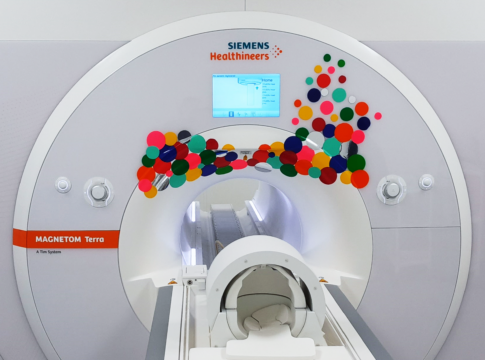
Five times more powerful than the standard MagPro, the MagVenture Magpro XP, Available at Campus Biotech, the MagPro XP is a high-performance 250 Hz transcranial magnetic stimulation (TMS) stimulator compatible with MRI. It allows researchers to simultaneously manipulate and measure brain activity by combining TMS and 3T functional magnetic resonance imaging (fMRI). This technology offers unprecedented possibilities to bridge the gap between clinical and biomedical research, to better understand cognitive processes by stimulating specific neuronal populations, manipulating the brain and creating reversible virtual lesions while measuring the brain's neurovascular response to determine causal relationships. A dedicated MRI coil network enables a high-sensitivity fMRI , particularly at the stimulation site. A second MRI coil array is placed on the contralateral side to obtain a complete coverage of the brain Furthermore, the TMS/fMRI system can be easily combined with advanced neuronavigation systems for precise targeting of specific brain regions. TMS stimulation can be rapidly combined with MRI acquisitions to study the cerebral hemodynamic response to TMS stimulation. Potential targets of TMS include the motor, visual, and prefrontal cortex.
Simultaneous TMS-fMRI configuration allows:
- Simultaneous recording of theta-burst and 3T fMRI protocols
- Advanced pulse train control
- Stimulation at high frequencies (0 – 250 Hz)
- 5 times more power than standard MagPro equipment
- Remote control and/or triggering with conventional neuroimaging software


High output power

Focal stimulation 0-250 Hz

TMS + fMRI simultaneously
Highlights
- Merger of EEG-BCI, MEG and Neuromodulation facilities to form the M/EEG-Neuromod platform.
- Creation of a user wiki for MEG, EEG and neuromodulation equipment
- Development of community-based data processing software (MNE-python)
PROSPECTS AND ACHIEVEMENTS
The platform plans to adopt and integrate new technologies such as temporal interference stimulation, ultrasound, OPM-MEG, and robotic TMS for increased accuracy. It also aims to expand its services to international researchers and private companies.
The FCBG's MEEG-NMOD platform offers exceptional infrastructure and active practical support for cognitive neuroscience research requiring cutting-edge techniques. Thanks to the platform's team, we can launch studies effectively and efficiently, even for complex projects involving multiple phases and instruments.
Prof. Alexis Hervais-Adelman
Faculty of Medicine, University of Geneva and member of the PAC of the M/EEG-NMOD platformM/EEG – Ongoing Projects
Some examples of high-impact research using our infrastructure
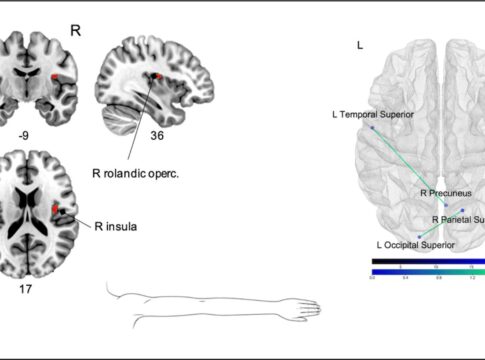
Loss of self-awareness
Raising awareness: Disorders of self-awareness are not always immediately perceptible; some remain masked during…
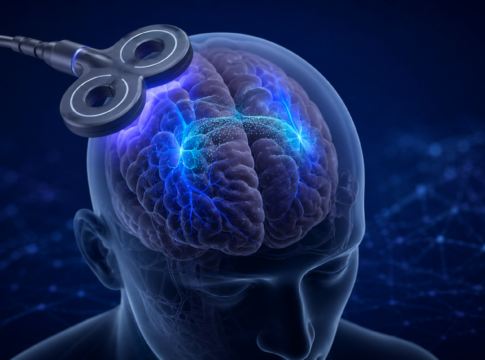
When the brain shuts down on MRI: a more complex signal...
When a decrease in signal remains difficult to interpret, functional magnetic resonance imaging (fMRI) can identify the brain regions that react...
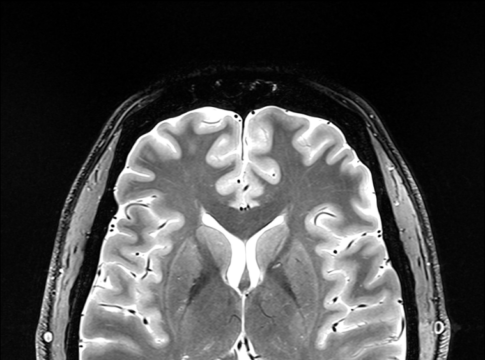
Knowledge as a reward
Comparison of different types of rewards: Participants take part in a task comprising three types of rewards, of high or low value: -...
Brain memory networks in epilepsy
Multimodal mapping of brain networks: Combining EEG, ultra-high field MRI, and animal models. This project aims to identify markers...
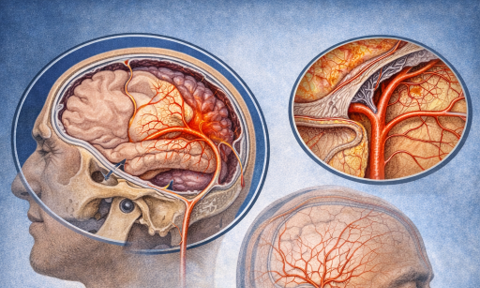
Reducing the recurrence of chronic subdural hematomas
Is MMA really responsible? While new data confirms MMA's role in the bleeding, the effectiveness of embolization...

Screening for degenerative cervical myelopathy
Early screening: Patients at high risk of MCD can be screened, such as those with other degenerative spinal problems...

EEG monitoring of the response to antipsychotic treatment
Reading brain signals in schizophrenia: This study focuses on schizophrenic patients presenting with an acute psychotic episode. Patients are asked...

Stress regulation and early brain development
Capturing Stress Synchronization: The project examines how children and their caregivers become physiologically "synchronized" in stressful situations. The...

To hear with the brain as much as with the ear
Following a speech signal: Speech comprehension depends on our ability to follow the signal as it unfolds...
M/EEG – News, events and conferences
Follow advances in brain imaging from our M/EEG & Neuromod (MEG) Platform. Articles, studies and innovations unveil clinical and technological applications from Campus Biotech Geneva.
M/EEG – Events and Conferences
Follow the latest advances in brain imaging from our M/EEG & Neuromod (MEG) Platform. Articles, studies, and innovations showcase the clinical and technological applications emerging from Campus Biotech Geneva.

Highlights
- The only MEG system in Switzerland
- Multimodal integration with other platforms: Simultaneous TMS/fMRI, TACS/fMRI, EEG/VR and EEG/Neuromodulation
- Expertise in real-time EEG for brain-computer interface (BCI) and neurofeedback protocols
Reviews

Key equipment
0 EEG systems
with ultra-high density helmets
0 TES systems
compatible with MRI and EEG
0 TMS systems
including TMS-MRI and rTMS for treatments
0
experimental cabins
Physiological recording devices (eye tracking, respiration, heart rate, etc.)
0 hours
equipment usage
0
publications in 2024 (scientific journals)
0 Ongoing
from 35 research groups and 6+ academic partners
Our Team
Gwénael Birot
ManagerPlatform administration,
Maintenance of facilities and equipment,
Purchase and installation of new equipment,
User support
Vincent Rochas
NMOD and EEG expertStudy design,
Data acquisition,
Data analysis,
User support
Jonathan Marquis
MEG TechnologistStudy design,
MEG data acquisition,
EEG data acquisition,
User support
Victor Férat
M/EEG EngineerSignal processing,
Neuroimaging,
Software development,
User support
Platform Advisory Committee


Address
Fondation Campus Biotech Geneva
Chemin des Mines 9, 1202 Geneva
Hours
Monday to Friday, 9:00 – 18:00