


Interfacing the human body with the next generation of electronics requires technological advancement in designing and producing bioelectronic circuits. These circuits must integrate electrical functionality while simultaneously addressing limitations in mechanical compliance and dynamics, biocompatibility, and consistent, scalable manufacturing. The combination of mechanically disparate materials ranging from elastomers to inorganic crystalline semiconductors calls for modular designs with reliable and scalable electromechanical connectors. Here, we report on a novel interconnection solution for soft-to-flexible bioelectronic interfaces using a patterned and machined flexible printed circuit board, which we term FlexComb, interfaced with soft transducing systems. Using a simple assembly process, arrays of protruding “fingers” bearing individual electrical terminals are laser-machined on a standard flexible printed circuit board to create a comb-like structure, namely, the FlexComb. A matching pattern is also machined in the soft system to host and interlock electromechanically the FlexComb connections via a soft electrically conducting composite. We examine the electrical and electromechanical properties of the interconnection and demonstrate the versatility and scalability of the method through various customized submillimetric designs. In a pilot in vivo study, we validate the stability and compatibility of the FlexComb technology in a subdural electrocorticography system implanted for 6 months on the auditory cortex of a minipig. The FlexComb provides a reliable and simple technique to bond and connect soft transducing systems with flexible or rigid electronic boards, which should find many implementations in soft robotics and wearable and implantable bioelectronics.
Publication scientifique
A low-profile electromechanical packaging system for soft-to-flexible bioelectronic interfaces
Autres publications de la plateforme
The e-Flower: A hydrogel-actuated 3D MEA for brain spheroid electrophysiology
Martinelli, Eleonora; Akouissi, Outman; Liebi, Luca; Furfaro, Ivan; Maulà, Desirée; Savoia, Nathan; Remy, Antoine; Nikles, Laetitia; Roux, Adrien; Stoppini, Luc; Lacour, Stéphanie P.
Science Advances
Wireless, battery-free, and real-time monitoring of water permeation across thin-film encapsulation
Mariello, Massimo; Rosenthal, James Daniel; Cecchetti, Francesco; Gao, Mingxiang; Skrivervik, Anja K.; Leterrier, Yves; Lacour, Stéphanie P.
Nature Communications
Optical Monitoring of Water Side Permeation in Thin Film Encapsulation
Wu, Kangling; Mariello, Massimo; Leterrier, Yves; Lacour, Stéphanie P.
Advanced Materials
Deployment of an electrocorticography system with a soft robotic actuator
Song, Sukho; Fallegger, Florian; Trouillet, Alix; Kim, Kyungjin; Lacour, Stéphanie P.
Science Robotics
Subdural Soft Electrocorticography (ECoG) Array Implantation and Long-Term Cortical Recording in...
Fallegger, Florian; Trouillet, Alix; Lacour, Stéphanie P.
Journal of Visualized Experiments
Conformable neural interface based on off-stoichiometry thiol-ene-epoxy thermosets
Borda, Eleonora; Medagoda, Danashi Imani; Airaghi Leccardi, Marta Jole Ildelfonsa; Zollinger, Elodie Geneviève; Ghezzi, Diego
Biomaterials
Journal de publication
APL Bioengineering
Auteurs:
Fallegger, Florian; Trouillet, Alix; Coen, Florent-Valéry; Schiavone, Giuseppe; Lacour, Stéphanie P.
Date de publication:
Plateforme:
Études récentes de la plateforme
Réparer les lésions de la moelle épinière
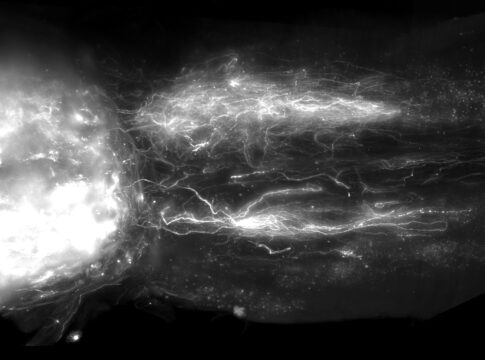
Cibler les neurones qui rétablissent la marche
À l'aide de la transcriptomique unicellulaire et spécifique à la projection, les scientifiques ont découvert une population...

Restaurer le mouvement après une paralysie
Stimulation électrique de la moëlle épinière
Un réseau d’électrodes implantables, connecté à un stimulateur implanté, délivre des impulsions électriques aux différents nerfs spinaux.
Chaque...
Suivi de la dopamine dans la maladie de Parkinson
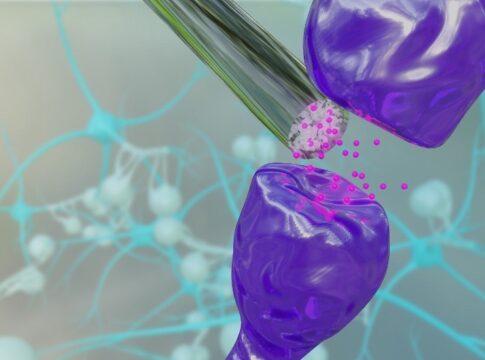
Détection de la dopamine grâce à des biosenseurs à base d’ADN
Une approche innovante utilise des brins d’ADN artificiellement conçus, appelés aptamères, qui capturent...