

Rhythmic cerebral activity predicts whether the visual or the auditory component of speech influences perception. , When we see our interlocutor, our brain seamlessly extracts visual cues from their face and processes them along with the sound of their voice, making speech an intrinsically multimodal signal. Visual cues are especially important in noisy environments, when the auditory signal is less reliable. Neuronal oscillations might be involved in the cortical processing of audiovisual speech by selecting which sensory channel contributes more to perception. To test this, we designed computer-generated naturalistic audiovisual speech stimuli where one mismatched phoneme-viseme pair in a key word of sentences created bistable perception. Neurophysiological recordings (high-density scalp and intracranial electroencephalography) revealed that the precise phase angle of theta-band oscillations in posterior temporal and occipital cortex of the right hemisphere was crucial to select whether the auditory or the visual speech cue drove perception. We demonstrate that the phase of cortical oscillations acts as an instrument for sensory selection in audiovisual speech processing.
Publication scientifique
The phase of cortical oscillations determines the perceptual fate of visual cues in naturalistic audiovisual speech
Autres publications de la plateforme
Causal disconnectomics of motion perception networks: insights from transcranial magnetic stimulation‐induced...
Raffin, Estelle; Salamanca‐Giron, Roberto F.; Huxlin, Krystel R.; Reynaud, Olivier; Mattera, Loan; Martuzzi, Roberto; Hummel, Friedhelm C.
The Journal of Physiology
Boosting hemianopia recovery: the power of interareal cross-frequency brain stimulation
Raffin, Estelle; Bevilacqua, Michele; Windel, Fabienne; Menoud, Pauline; Salamanca-Giron, Roberto F; Feroldi, Sarah; Zandvliet, Sarah B; Ramdass, Nicola; Draaisma, Laurijn; Vuilleumier, Patrik; Guggisberg, Adrian G; Bonvin, Christophe; Fleury, Lisa; Huxlin, Krystel R; Beanato, Elena; Hummel, Friedhelm C
Brain
Return of the GEDAI: Unsupervised EEG Denoising based on Leadfield Filtering
Ros, Tomas; Férat, Victor; Huang, Yingqi; Colangelo, Cristina; Kia, Seyed Mostafa; Wolfers, Thomas; Vulliemoz, Serge; Michela, Abele
Multivariate deep phenotyping reveals behavioral correlates of non-restorative sleep in 22q11.2...
Reich, Natacha; Imparato, Andrea; Cataldi, Jacinthe; Thillainathan, Niveettha; Delavari, Farnaz; Schneider, Maude; Eliez, Stephan; Siclari, Francesca; Sandini, Corrado
Psychiatry Research
EEG microstate D as psychosis-specific correlate in adolescents and young adults...
Liebrand, Matthias; Katsarakis, Angelos; Josi, Johannes; Diezig, Sarah; Michel, Chantal; Schultze-Lutter, Frauke; Rochas, Vincent; Mancini, Valentina; Kaess, Michael; Hubl, Daniela; Koenig, Thomas; Kindler, Jochen
Schizophrenia Research
EEG correlates of egocentric and altercentric biases in forensic cases with...
Rochas, Vincent; Montandon, Marie-Louise; Rodriguez, Cristelle; Herrmann, François R.; Eytan, Ariel; Pegna, Alan J.; Michel, Christoph M.; Giannakopoulos, Panteleimon
Frontiers in Neuroscience
Journal de publication
Science Advances
Auteurs:
Thézé, Raphaël; Giraud, Anne-Lise; Mégevand, Pierre
Date de publication:
Plateforme:
Études récentes de la plateforme
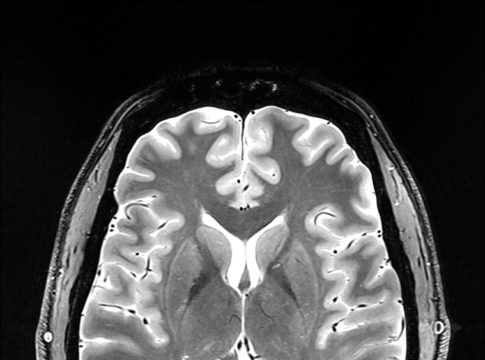
La connaissance comme récompense
Comparaison de différents types de récompenses
Les participants prennent part à une tâche comprenant trois types de récompenses, de valeur élevée ou faible :
-...
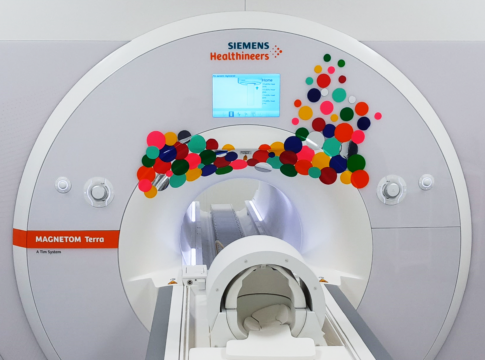
Réseaux cérébraux de la mémoire dans l’épilepsie
Cartographie multimodale des réseaux cérébraux
Combinaison de l'EEG, de l'IRM à champ ultra-élevé et de modèles animaux
Ce projet vise à identifier les marqueurs...
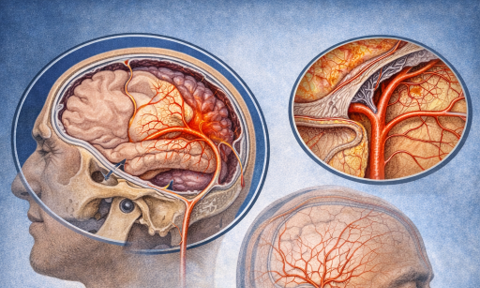
Réduire les récidives d’hématomes sous-duraux chroniques
La MMA est-elle vraiment responsable ?
Si de nouvelles données confirment le rôle de la MMA dans le saignement, l'efficacité de l'embolisation de la...