

Abstract Clinical research emphasizes the implementation of rigorous and reproducible study designs that rely on between-group matching or controlling for sources of biological variation such as subject’s sex and age. However, corrections for body size (i.e., height and weight) are mostly lacking in clinical neuroimaging designs. This study investigates the importance of body size parameters in their relationship with spinal cord (SC) and brain magnetic resonance imaging (MRI) metrics. Data were derived from a cosmopolitan population of 267 healthy human adults (age 30.1 ± 6.6 years old, 125 females). We show that body height correlates with brain gray matter (GM) volume, cortical GM volume, total cerebellar volume, brainstem volume, and cross-sectional area (CSA) of cervical SC white matter (CSA-WM; 0.44 ≤ r ≤ 0.62). Intracranial volume (ICV) correlates with body height (r = 0.46) and the brain volumes and CSA-WM (0.37 ≤ r ≤ 0.77). In comparison, age correlates with cortical GM volume, precentral GM volume, and cortical thickness (-0.21 ≥ r ≥ -0.27). Body weight correlates with magnetization transfer ratio in the SC WM, dorsal columns, and lateral corticospinal tracts (-0.20 ≥ r ≥ -0.23). Body weight further correlates with the mean diffusivity derived from diffusion tensor imaging (DTI) in SC WM (r = -0.20) and dorsal columns (-0.21), but only in males. CSA-WM correlates with brain volumes (0.39 ≤ r ≤ 0.64), and with precentral gyrus thickness and DTI-based fractional anisotropy in SC dorsal columns and SC lateral corticospinal tracts (-0.22 ≥ r ≥ -0.25). Linear mixture of age, sex, or sex and age, explained 2 ± 2%, 24 ± 10%, or 26 ± 10%, of data variance in brain volumetry and SC CSA. The amount of explained variance increased to 33 ± 11%, 41 ± 17%, or 46 ± 17%, when body height, ICV, or body height and ICV were added into the mixture model. In females, the explained variances halved suggesting another unidentified biological factor(s) determining females’ central nervous system (CNS) morphology. In conclusion, body size and ICV are significant biological variables. Along with sex and age, body size should therefore be included as a mandatory variable in the design of clinical neuroimaging studies examining SC and brain structure; and body size and ICV should be considered as covariates in statistical analyses. Normalization of different brain regions with ICV diminishes their correlations with body size, but simultaneously amplifies ICV-related variance (r = 0.72 ± 0.07) and suppresses volume variance of the different brain regions (r = 0.12 ± 0.19) in the normalized measurements.
Publication scientifique
Body size and intracranial volume interact with the structure of the central nervous system: A multi-center in vivo neuroimaging study
Autres publications de la plateforme
Causal disconnectomics of motion perception networks: insights from transcranial magnetic stimulation‐induced...
Raffin, Estelle; Salamanca‐Giron, Roberto F.; Huxlin, Krystel R.; Reynaud, Olivier; Mattera, Loan; Martuzzi, Roberto; Hummel, Friedhelm C.
The Journal of Physiology
Boosting hemianopia recovery: the power of interareal cross-frequency brain stimulation
Raffin, Estelle; Bevilacqua, Michele; Windel, Fabienne; Menoud, Pauline; Salamanca-Giron, Roberto F; Feroldi, Sarah; Zandvliet, Sarah B; Ramdass, Nicola; Draaisma, Laurijn; Vuilleumier, Patrik; Guggisberg, Adrian G; Bonvin, Christophe; Fleury, Lisa; Huxlin, Krystel R; Beanato, Elena; Hummel, Friedhelm C
Brain
A graphical pipeline platform for MRS data processing and analysis: MRSpecLAB
Xiao, Ying; Kaiser, Antonia; Kockisch, Matthias; Back, Alex; Carlet, Robin; Liu, Xinyu; Huang, Zhiwei; Döring, André; Widmaier, Mark; Xin, Lijing
Frontiers in Neuroimaging
Brain activation for language and its relationship to cognitive and linguistic...
Balboni, Irene; Rampinini, Alessandra; Kepinska, Olga; Berthele, Raphael; Golestani, Narly
Cerebral Cortex
Resting-state functional connectivity abnormalities in subjective cognitive decline: A 7T MRI...
Pievani, M.; Ribaldi, F.; Toussas, K.; Da Costa, S.; Jorge, J.; Reynaud, O.; Chicherio, C.; Blouin, J.L.; Scheffler, M.; Garibotto, V.; Jovicich, J.; Jelescu, I.O.; Frisoni, G.B.
Neurobiology of Aging
Translational research approach to social orienting deficits in autism: the role...
Contestabile, Alessandro; Kojovic, Nada; Casarotto, Giulia; Delavari, Farnaz; Hagmann, Patric; Schaer, Marie; Bellone, Camilla
Molecular Psychiatry
Journal de publication
Imaging Neuroscience
Auteurs:
Labounek, René; Bondy, Monica T.; Paulson, Amy L.; Bédard, Sandrine; Abramovic, Mihael; Alonso-Ortiz, Eva; Atcheson, Nicole T.; Barlow, Laura R.; Barry, Robert L.; Barth, Markus; Battiston, Marco; Büchel, Christian; Budde, Matthew D.; Callot, Virginie; Combes, Anna; De Leener, Benjamin; Descoteaux, Maxime; De Sousa, Paulo Loureiro; Dostál, Marek; Doyon, Julien; Dvorak, Adam V.; Eippert, Falk; Epperson, Karla R.; Epperson, Kevin S.; Freund, Patrick; Finsterbusch, Jürgen; Foias, Alexandru; Fratini, Michela; Fukunaga, Issei; Wheeler-Kingshott, Claudia A.M. Gandini; Germani, GianCarlo; Gilbert, Guillaume; Giove, Federico; Grussu, Francesco; Hagiwara, Akifumi; Henry, Pierre-Gilles; Horák, Tomáš; Hori, Masaaki; Joers, James M.; Kamiya, Kouhei; Karbasforoushan, Haleh; Keřkovský, Miloš; Khatibi, Ali; Kim, Joo-won; Kinany, Nawal; Kitzler, Hagen; Kolind, Shannon; Kong, Yazhuo; Kudlička, Petr; Kuntke, Paul; Kurniawan, Nyoman D.; Kusmia, Slawomir; Laganà, Maria Marcella; Laule, Cornelia; Law, Christine S.W.; Leutritz, Tobias; Liu, Yaou; Llufriu, Sara; Mackey, Sean; Martin, Allan R.; Martinez-Heras, Eloy; Mattera, Loan; O’Grady, Kristin P.; Papinutto, Nico; Papp, Daniel; Pareto, Deborah; Parrish, Todd B.; Pichiecchio, Anna; Prados, Ferran; Rovira, Àlex; Ruitenberg, Marc J.; Samson, Rebecca S.; Savini, Giovanni; Seif, Maryam; Seifert, Alan C.; Smith, Alex K.; Smith, Seth A.; Smith, Zachary A.; Solana, Elisabeth; Suzuki, Yuichi; Tackley, George W; Tinnermann, Alexandra; Valošek, Jan; Van De Ville, Dimitri; Yiannakas, Marios C.; Weber Ii, Kenneth A.; Weiskopf, Nikolaus; Wise, Richard G.; Wyss, Patrik O.; Xu, Junqian; Cohen-Adad, Julien; Lenglet, Christophe; Nestrašil, Igor
Date de publication:
Plateforme:
Études récentes de la plateforme

Restaurer le mouvement après une paralysie
Stimulation électrique de la moëlle épinière
Un réseau d’électrodes implantables, connecté à un stimulateur implanté, délivre des impulsions électriques aux différents nerfs spinaux.
Chaque...
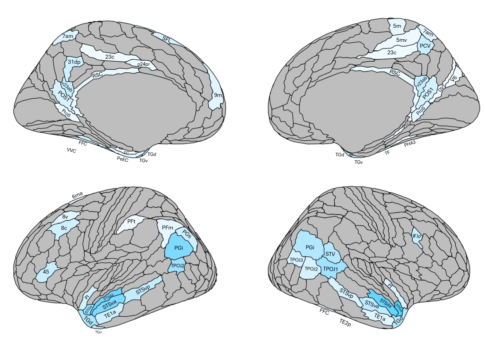
Pourquoi certains cerveaux adorent apprendre les langues
Aptitude au langage dans le cerveau et le comportement
Les participants réalisent un protocole d’IRM complet, nous permettant d’étudier à la fois la structure...
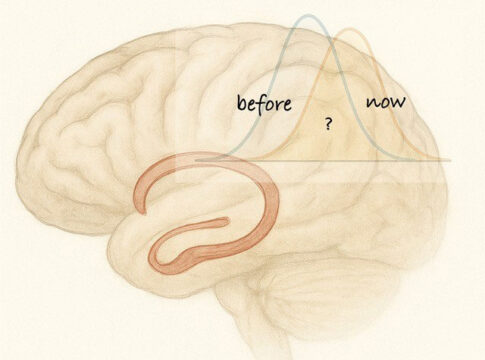
Souvenirs déformés
Un paradigme pour tester la distorsion de mémoire
Les patients sont examinés avec un test spécifique de reconnaissance d'images, dans lequel certaines images sont...