
Abstract This fMRI study examines the role of local and global motion information in facial movements during exposure to novel dynamic face stimuli. We found that synchronous expressions distinctively engaged medial prefrontal areas in the rostral and caudal sectors of anterior cingulate cortex (r/cACC) extending to inferior supplementary motor areas, as well as motor cortex and bilateral superior frontal gyrus (global temporal-spatial processing). Asynchronous expressions in which one part of the face unfolded before the other activated more the right superior temporal sulcus (STS) and inferior frontal gyrus (local temporal-spatial processing). These differences in temporal dynamics had no effect on visual face-responsive areas. Dynamic causal modeling analysis further showed that processing of asynchronous expression features was associated with a differential information flow, centered on STS, which received direct input from occipital cortex and projected to the amygdala. Moreover, STS and amygdala displayed selective interactions with cACC where the integration of both local and global motion cues could take place. These results provide new evidence for a role of local and global temporal dynamics in emotional expressions, extracted in partly separate brain pathways. Importantly, we show that dynamic expressions with synchronous movement cues may distinctively engage brain areas responsible for motor execution of expressions.
Publication scientifique
Brain Networks Processing Temporal Information in Dynamic Facial Expressions
Autres publications de la plateforme
Causal disconnectomics of motion perception networks: insights from transcranial magnetic stimulation‐induced...
Raffin, Estelle; Salamanca‐Giron, Roberto F.; Huxlin, Krystel R.; Reynaud, Olivier; Mattera, Loan; Martuzzi, Roberto; Hummel, Friedhelm C.
The Journal of Physiology
Boosting hemianopia recovery: the power of interareal cross-frequency brain stimulation
Raffin, Estelle; Bevilacqua, Michele; Windel, Fabienne; Menoud, Pauline; Salamanca-Giron, Roberto F; Feroldi, Sarah; Zandvliet, Sarah B; Ramdass, Nicola; Draaisma, Laurijn; Vuilleumier, Patrik; Guggisberg, Adrian G; Bonvin, Christophe; Fleury, Lisa; Huxlin, Krystel R; Beanato, Elena; Hummel, Friedhelm C
Brain
Return of the GEDAI: Unsupervised EEG Denoising based on Leadfield Filtering
Ros, Tomas; Férat, Victor; Huang, Yingqi; Colangelo, Cristina; Kia, Seyed Mostafa; Wolfers, Thomas; Vulliemoz, Serge; Michela, Abele
Multivariate deep phenotyping reveals behavioral correlates of non-restorative sleep in 22q11.2...
Reich, Natacha; Imparato, Andrea; Cataldi, Jacinthe; Thillainathan, Niveettha; Delavari, Farnaz; Schneider, Maude; Eliez, Stephan; Siclari, Francesca; Sandini, Corrado
Psychiatry Research
EEG microstate D as psychosis-specific correlate in adolescents and young adults...
Liebrand, Matthias; Katsarakis, Angelos; Josi, Johannes; Diezig, Sarah; Michel, Chantal; Schultze-Lutter, Frauke; Rochas, Vincent; Mancini, Valentina; Kaess, Michael; Hubl, Daniela; Koenig, Thomas; Kindler, Jochen
Schizophrenia Research
EEG correlates of egocentric and altercentric biases in forensic cases with...
Rochas, Vincent; Montandon, Marie-Louise; Rodriguez, Cristelle; Herrmann, François R.; Eytan, Ariel; Pegna, Alan J.; Michel, Christoph M.; Giannakopoulos, Panteleimon
Frontiers in Neuroscience
Journal de publication
Cerebral Cortex
Auteurs:
Skiba, Rafal M; Vuilleumier, Patrik
Date de publication:
Plateforme:
Études récentes de la plateforme

Restaurer le mouvement après une paralysie
Stimulation électrique de la moëlle épinière
Un réseau d’électrodes implantables, connecté à un stimulateur implanté, délivre des impulsions électriques aux différents nerfs spinaux.
Chaque...
Comment les souvenirs évoluent-ils avec le temps ?
Une fenêtre sur le cerveau
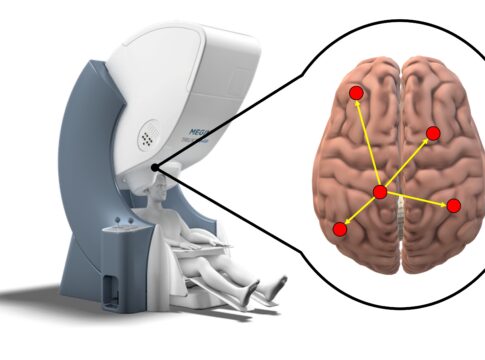
La magnétoencéphalographie (MEG) nous permet d’enregistrer l’activité neuronale avec une grande précision spatiale et temporelle.
Nous utilisons cette technique...
Stimulation cérébrale à domicile pour booster la cognition
Améliorer la cognition
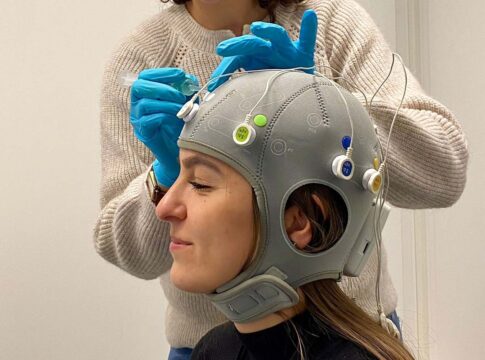
Explorer la stimulation cérébrale non invasive pour soutenir les fonctions exécutives
La stimulation transcrânienne par courant alternatif (tACS) utilise de faibles...