

Abstract A growing number of studies have focused on identifying cognitive processes that are modulated by interoceptive signals, particularly in relation to the respiratory or cardiac cycle. Considering the fundamental role of interoception in bodily self‐consciousness, we here investigated whether interoceptive signals also impact self‐voice perception. We applied an interactive, robotic paradigm associated with somatic passivity (a bodily state characterized by illusory misattribution of self‐generated touches to someone else) to investigate whether somatic passivity impacts self‐voice perception as a function of concurrent interoceptive signals. Participants’ breathing and heartbeat signals were recorded while they performed two self‐voice tasks (self‐other voice discrimination and loudness perception) and while simultaneously experiencing two robotic conditions (somatic passivity condition; control condition). Our data reveal that respiration, but not cardiac activity, affects self‐voice perception: participants were better at discriminating self‐voice from another person’s voice during the inspiration phase of the respiration cycle. Moreover, breathing effects were prominent in participants experiencing somatic passivity and a different task with the same stimuli (i.e., judging the loudness and not identity of the voices) was unaffected by breathing. Combining interoception and voice perception with self‐monitoring framework, these data extend findings on breathing‐dependent changes in perception and cognition to self‐related processing. , Impact StatementThe contents of this page will be shown on the eTOC on the online version only. It will not be published as part of the article PDF. We combined psychophysics with robotics and voice‐morphing technology to evaluate the effect of breathing on self‐voice perception. Our results show that listeners better perceive their own voice during inspiration, an effect that is modulated by self‐related bodily processing. This extends previous findings documenting the effect of interoceptive signals on perception and suggests that the bodily self may serve as a scaffold for cognition.
Publication scientifique
Breathing affects self‐other voice discrimination in a bodily state associated with somatic passivity
Autres publications de la plateforme
Causal disconnectomics of motion perception networks: insights from transcranial magnetic stimulation‐induced...
Raffin, Estelle; Salamanca‐Giron, Roberto F.; Huxlin, Krystel R.; Reynaud, Olivier; Mattera, Loan; Martuzzi, Roberto; Hummel, Friedhelm C.
The Journal of Physiology
Boosting hemianopia recovery: the power of interareal cross-frequency brain stimulation
Raffin, Estelle; Bevilacqua, Michele; Windel, Fabienne; Menoud, Pauline; Salamanca-Giron, Roberto F; Feroldi, Sarah; Zandvliet, Sarah B; Ramdass, Nicola; Draaisma, Laurijn; Vuilleumier, Patrik; Guggisberg, Adrian G; Bonvin, Christophe; Fleury, Lisa; Huxlin, Krystel R; Beanato, Elena; Hummel, Friedhelm C
Brain
Return of the GEDAI: Unsupervised EEG Denoising based on Leadfield Filtering
Ros, Tomas; Férat, Victor; Huang, Yingqi; Colangelo, Cristina; Kia, Seyed Mostafa; Wolfers, Thomas; Vulliemoz, Serge; Michela, Abele
Multivariate deep phenotyping reveals behavioral correlates of non-restorative sleep in 22q11.2...
Reich, Natacha; Imparato, Andrea; Cataldi, Jacinthe; Thillainathan, Niveettha; Delavari, Farnaz; Schneider, Maude; Eliez, Stephan; Siclari, Francesca; Sandini, Corrado
Psychiatry Research
EEG microstate D as psychosis-specific correlate in adolescents and young adults...
Liebrand, Matthias; Katsarakis, Angelos; Josi, Johannes; Diezig, Sarah; Michel, Chantal; Schultze-Lutter, Frauke; Rochas, Vincent; Mancini, Valentina; Kaess, Michael; Hubl, Daniela; Koenig, Thomas; Kindler, Jochen
Schizophrenia Research
EEG correlates of egocentric and altercentric biases in forensic cases with...
Rochas, Vincent; Montandon, Marie-Louise; Rodriguez, Cristelle; Herrmann, François R.; Eytan, Ariel; Pegna, Alan J.; Michel, Christoph M.; Giannakopoulos, Panteleimon
Frontiers in Neuroscience
Journal de publication
Psychophysiology
Auteurs:
Orepic, Pavo; Park, Hyeong‐Dong; Rognini, Giulio; Faivre, Nathan; Blanke, Olaf
Date de publication:
Plateforme:
Études récentes de la plateforme

Restaurer le mouvement après une paralysie
Stimulation électrique de la moëlle épinière
Un réseau d’électrodes implantables, connecté à un stimulateur implanté, délivre des impulsions électriques aux différents nerfs spinaux.
Chaque...
Comment les souvenirs évoluent-ils avec le temps ?
Une fenêtre sur le cerveau
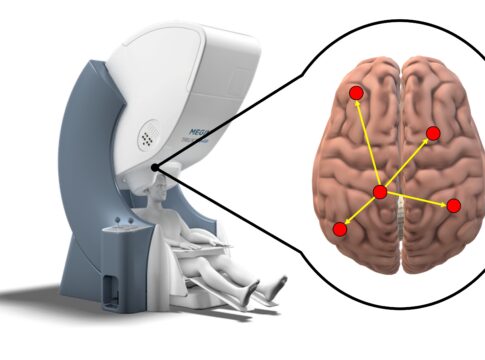
La magnétoencéphalographie (MEG) nous permet d’enregistrer l’activité neuronale avec une grande précision spatiale et temporelle.
Nous utilisons cette technique...
Stimulation cérébrale à domicile pour booster la cognition
Améliorer la cognition
Explorer la stimulation cérébrale non invasive pour soutenir les fonctions exécutives
La stimulation transcrânienne par courant alternatif (tACS) utilise de faibles...