
Presence hallucination in Parkinson’s disease (PD) is shown to arise from errors in sensorimotor integration and frontotemporal disconnection. , Grasping hallucinations in PD Nearly half of the patients with Parkinson’s disease (PD) experience hallucinations, and recent studies have shown that hallucinations are associated with negative cognitive outcome and higher mortality. Now, Bernasconi et al. used a robotic method to induce hallucinations in patients with PD to study the mechanisms behind this symptom. The authors identified a subgroup of patients with increased sensitivity to hallucinations and used magnetic resonance to show that frontotemporal connectivity, associated with hallucinations in healthy participants, was disrupted in patients with PD suffering from hallucinations. The results might improve diagnosis of hallucinations in patients with PD and facilitate the development of targeted therapies. , Hallucinations in Parkinson’s disease (PD) are disturbing and frequent non-motor symptoms and constitute a major risk factor for psychosis and dementia. We report a robotics-based approach applying conflicting sensorimotor stimulation, enabling the induction of presence hallucinations (PHs) and the characterization of a subgroup of patients with PD with enhanced sensitivity for conflicting sensorimotor stimulation and robot-induced PH. We next identify the fronto-temporal network of PH by combining MR-compatible robotics (and sensorimotor stimulation in healthy participants) and lesion network mapping (neurological patients without PD). This PH-network was selectively disrupted in an additional and independent cohort of patients with PD, predicted the presence of symptomatic PH, and associated with cognitive decline. These robotics-neuroimaging findings extend existing sensorimotor hallucination models to PD and reveal the pathological cortical sensorimotor processes of PH in PD, potentially indicating a more severe form of PD that has been associated with psychosis and cognitive decline.
Publication scientifique
Robot-induced hallucinations in Parkinson’s disease depend on altered sensorimotor processing in fronto-temporal network
Autres publications de la plateforme
Causal disconnectomics of motion perception networks: insights from transcranial magnetic stimulation‐induced...
Raffin, Estelle; Salamanca‐Giron, Roberto F.; Huxlin, Krystel R.; Reynaud, Olivier; Mattera, Loan; Martuzzi, Roberto; Hummel, Friedhelm C.
The Journal of Physiology
Boosting hemianopia recovery: the power of interareal cross-frequency brain stimulation
Raffin, Estelle; Bevilacqua, Michele; Windel, Fabienne; Menoud, Pauline; Salamanca-Giron, Roberto F; Feroldi, Sarah; Zandvliet, Sarah B; Ramdass, Nicola; Draaisma, Laurijn; Vuilleumier, Patrik; Guggisberg, Adrian G; Bonvin, Christophe; Fleury, Lisa; Huxlin, Krystel R; Beanato, Elena; Hummel, Friedhelm C
Brain
A graphical pipeline platform for MRS data processing and analysis: MRSpecLAB
Xiao, Ying; Kaiser, Antonia; Kockisch, Matthias; Back, Alex; Carlet, Robin; Liu, Xinyu; Huang, Zhiwei; Döring, André; Widmaier, Mark; Xin, Lijing
Frontiers in Neuroimaging
Brain activation for language and its relationship to cognitive and linguistic...
Balboni, Irene; Rampinini, Alessandra; Kepinska, Olga; Berthele, Raphael; Golestani, Narly
Cerebral Cortex
Resting-state functional connectivity abnormalities in subjective cognitive decline: A 7T MRI...
Pievani, M.; Ribaldi, F.; Toussas, K.; Da Costa, S.; Jorge, J.; Reynaud, O.; Chicherio, C.; Blouin, J.L.; Scheffler, M.; Garibotto, V.; Jovicich, J.; Jelescu, I.O.; Frisoni, G.B.
Neurobiology of Aging
Translational research approach to social orienting deficits in autism: the role...
Contestabile, Alessandro; Kojovic, Nada; Casarotto, Giulia; Delavari, Farnaz; Hagmann, Patric; Schaer, Marie; Bellone, Camilla
Molecular Psychiatry
Journal de publication
Science Translational Medicine
Auteurs:
Bernasconi, Fosco; Blondiaux, Eva; Potheegadoo, Jevita; Stripeikyte, Giedre; Pagonabarraga, Javier; Bejr-Kasem, Helena; Bassolino, Michela; Akselrod, Michel; Martinez-Horta, Saul; Sampedro, Frederic; Hara, Masayuki; Horvath, Judit; Franza, Matteo; Konik, Stéphanie; Bereau, Matthieu; Ghika, Joseph-André; Burkhard, Pierre R.; Van De Ville, Dimitri; Faivre, Nathan; Rognini, Giulio; Krack, Paul; Kulisevsky, Jaime; Blanke, Olaf
Date de publication:
Plateforme:
Études récentes de la plateforme

Restaurer le mouvement après une paralysie
Stimulation électrique de la moëlle épinière
Un réseau d’électrodes implantables, connecté à un stimulateur implanté, délivre des impulsions électriques aux différents nerfs spinaux.
Chaque...
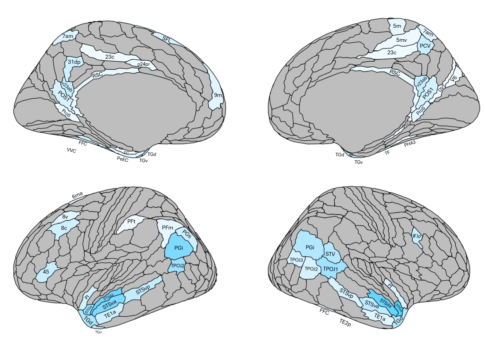
Pourquoi certains cerveaux adorent apprendre les langues
Aptitude au langage dans le cerveau et le comportement
Les participants réalisent un protocole d’IRM complet, nous permettant d’étudier à la fois la structure...

Reconstruire l’esprit de nos ancêtres
Étudier la cognition physique dans la phylogénie
Tester les individus dans leur environnement naturel permet d’offrir un cadre écologiquement valide à l’étude de la cognition.Pour...