
Abstract Cortical malformations such as focal cortical dysplasia type II (FCDII) are associated with pediatric drug-resistant epilepsy that necessitates neurosurgery. FCDII results from somatic mosaicism due to post-zygotic mutations in genes of the PI3K-AKT-mTOR pathway, which produce a subset of dysmorphic cells clustered within healthy brain tissue. Here we show a correlation between epileptiform activity in acute cortical slices obtained from human surgical FCDII brain tissues and the density of dysmorphic neurons. We uncovered multiple signatures of cellular senescence in these pathological cells, including p53/p16 expression, SASP expression and senescence-associated β-galactosidase activity. We also show that administration of senolytic drugs (dasatinib/quercetin) decreases the load of senescent cells and reduces seizure frequency in an Mtor S2215F FCDII preclinical mouse model, providing proof of concept that senotherapy may be a useful approach to control seizures. These findings pave the way for therapeutic strategies selectively targeting mutated senescent cells in FCDII brain tissue.
Publication scientifique
Targeting pathological cells with senolytic drugs reduces seizures in neurodevelopmental mTOR-related epilepsy
Autres publications de la plateforme
Developmental emergence of cortical neurogliaform cell diversity
Gomez, Lucia; Cadilhac, Christelle; Prados, Julien; Mule, Nandkishor; Jabaudon, Denis; Dayer, Alexandre
Development
Molecular programs guiding arealization of descending cortical pathways
Abe, Philipp; Lavalley, Adrien; Morassut, Ilaria; Santinha, Antonio J.; Roig-Puiggros, Sergi; Javed, Awais; Klingler, Esther; Baumann, Natalia; Prados, Julien; Platt, Randall J.; Jabaudon, Denis
Nature
Developmental emergence of first- and higher-order thalamic neuron molecular identities
Lo Giudice, Quentin; Wagener, Robin J.; Abe, Philipp; Frangeul, Laura; Jabaudon, Denis
Development
Regional differences in progenitor metabolism shape brain growth during development
Baumann, Natalia; Wagener, Robin J.; Javed, Awais; Conti, Eleonora; Abe, Philipp; Lopes, Andrea; Sansevrino, Roberto; Lavalley, Adrien; Magrinelli, Elia; Szalai, Timea; Fuciec, Daniel; Ferreira, Clothilde; Fièvre, Sabine; Fouassier, Andreane; D’Amico, Davide; Harschnitz, Oliver; Jabaudon, Denis
Cell
Single-cell genotyping and transcriptomic profiling of mosaic focal cortical dysplasia
Baldassari, Sara; Klingler, Esther; Teijeiro, Lucia Gomez; Doladilhe, Marion; Raoux, Corentin; Roig-Puiggros, Sergi; Bizzotto, Sara; Couturier, Jeanne; Gilbert, Alice; Sami, Lina; Ribierre, Théo; Aronica, Eleonora; Adle-Biassette, Homa; Chipaux, Mathilde; Jabaudon, Denis; Baulac, Stéphanie
Nature Neuroscience
Dual lineage origins contribute to neocortical astrocyte diversity
Zhou, Jiafeng; Vitali, Ilaria; Roig-Puiggros, Sergi; Javed, Awais; Cantando, Iva; Puglisi, Matteo; Bezzi, Paola; Jabaudon, Denis; Mayer, Christian; Bocchi, Riccardo
Nature Communications
Journal de publication
Nature Neuroscience
Auteurs:
Ribierre, Théo; Bacq, Alexandre; Donneger, Florian; Doladilhe, Marion; Maletic, Marina; Roussel, Delphine; Le Roux, Isabelle; Chassoux, Francine; Devaux, Bertrand; Adle-Biassette, Homa; Ferrand-Sorbets, Sarah; Dorfmüller, Georg; Chipaux, Mathilde; Baldassari, Sara; Poncer, Jean-Christophe; Baulac, Stéphanie
Date de publication:
Plateforme:
Études récentes de la plateforme
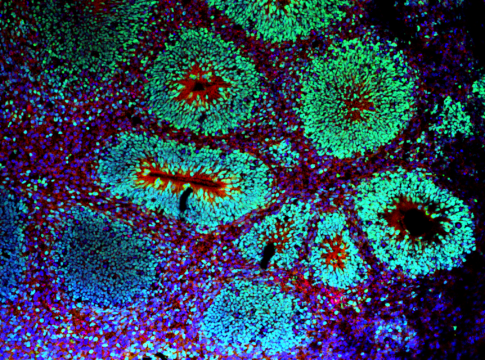
Reprogrammer des cellules humaines pour étudier les défauts du cerveau
Organoïdes cérébraux pour les troubles mentaux
Nous utilisons une approche appelée organoïdes cérébraux (« cerveau dans une boîte de Petri ») qui permet de...
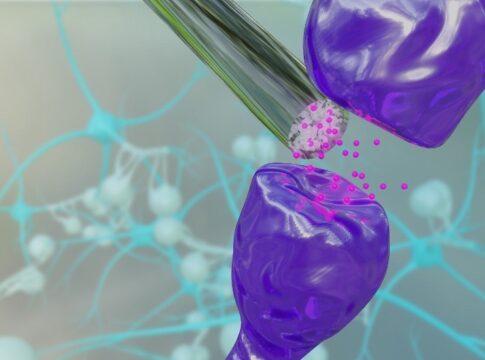
Suivi de la dopamine dans la maladie de Parkinson
Détection de la dopamine grâce à des biosenseurs à base d’ADN
Une approche innovante utilise des brins d’ADN artificiellement conçus, appelés aptamères, qui capturent...
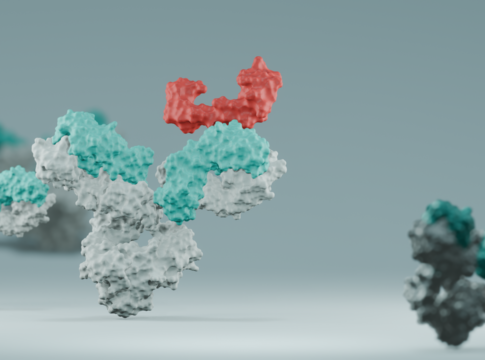
Suivre la trace des biomarqueurs sanguins de la maladie d’Alzheimer
Réinventer le diagnostic de la maladie d'Alzheimer
La maladie d’Alzheimer se développe des décennies avant l’apparition des symptômes.
Des recherches récentes suggèrent que le risque...