

Abstract Objective . Technical advances in deep brain stimulation (DBS) are crucial to improve therapeutic efficacy and battery life. We report the potentialities and pitfalls of one of the first commercially available devices capable of recording brain local field potentials (LFPs) from the implanted DBS leads, chronically and during stimulation. The aim was to provide clinicians with well-grounded tips on how to maximize the capabilities of this novel device, both in everyday practice and for research purposes. Approach . We collected clinical and neurophysiological data of the first 20 patients (14 with Parkinson’s disease (PD), five with dystonia, one with chronic pain) that received the Percept™ PC in our centres. We also performed tests in a saline bath to validate the recordings quality. Main results . The Percept PC reliably recorded the LFP of the implanted site, wirelessly and in real time. We recorded the most promising clinically useful biomarkers for PD and dystonia (beta and theta oscillations) with and without stimulation. Furthermore, we provide an open-source code to facilitate export and analysis of data. Critical aspects of the system are presently related to contact selection, artefact detection, data loss, and synchronization with other devices. Significance . New technologies will soon allow closed-loop neuromodulation therapies, capable of adapting stimulation based on real-time symptom-specific and task-dependent input signals. However, technical aspects need to be considered to ensure reliable recordings. The critical use by a growing number of DBS experts will alert new users about the currently observed shortcomings and inform on how to overcome them.
Publication scientifique
Towards adaptive deep brain stimulation: clinical and technical notes on a novel commercial device for chronic brain sensing
Autres publications de la plateforme
Causal disconnectomics of motion perception networks: insights from transcranial magnetic stimulation‐induced...
Raffin, Estelle; Salamanca‐Giron, Roberto F.; Huxlin, Krystel R.; Reynaud, Olivier; Mattera, Loan; Martuzzi, Roberto; Hummel, Friedhelm C.
The Journal of Physiology
Boosting hemianopia recovery: the power of interareal cross-frequency brain stimulation
Raffin, Estelle; Bevilacqua, Michele; Windel, Fabienne; Menoud, Pauline; Salamanca-Giron, Roberto F; Feroldi, Sarah; Zandvliet, Sarah B; Ramdass, Nicola; Draaisma, Laurijn; Vuilleumier, Patrik; Guggisberg, Adrian G; Bonvin, Christophe; Fleury, Lisa; Huxlin, Krystel R; Beanato, Elena; Hummel, Friedhelm C
Brain
Return of the GEDAI: Unsupervised EEG Denoising based on Leadfield Filtering
Ros, Tomas; Férat, Victor; Huang, Yingqi; Colangelo, Cristina; Kia, Seyed Mostafa; Wolfers, Thomas; Vulliemoz, Serge; Michela, Abele
Multivariate deep phenotyping reveals behavioral correlates of non-restorative sleep in 22q11.2...
Reich, Natacha; Imparato, Andrea; Cataldi, Jacinthe; Thillainathan, Niveettha; Delavari, Farnaz; Schneider, Maude; Eliez, Stephan; Siclari, Francesca; Sandini, Corrado
Psychiatry Research
EEG microstate D as psychosis-specific correlate in adolescents and young adults...
Liebrand, Matthias; Katsarakis, Angelos; Josi, Johannes; Diezig, Sarah; Michel, Chantal; Schultze-Lutter, Frauke; Rochas, Vincent; Mancini, Valentina; Kaess, Michael; Hubl, Daniela; Koenig, Thomas; Kindler, Jochen
Schizophrenia Research
EEG correlates of egocentric and altercentric biases in forensic cases with...
Rochas, Vincent; Montandon, Marie-Louise; Rodriguez, Cristelle; Herrmann, François R.; Eytan, Ariel; Pegna, Alan J.; Michel, Christoph M.; Giannakopoulos, Panteleimon
Frontiers in Neuroscience
Journal de publication
Journal of Neural Engineering
Auteurs:
Thenaisie, Yohann; Palmisano, Chiara; Canessa, Andrea; Keulen, Bart J; Capetian, Philipp; Jiménez, Mayte Castro; Bally, Julien F; Manferlotti, Elena; Beccaria, Laura; Zutt, Rodi; Courtine, Grégoire; Bloch, Jocelyne; Van Der Gaag, Niels A; Hoffmann, Carel F; Moraud, Eduardo Martin; Isaias, Ioannis U; Contarino, M Fiorella
Date de publication:
Plateforme:
Études récentes de la plateforme
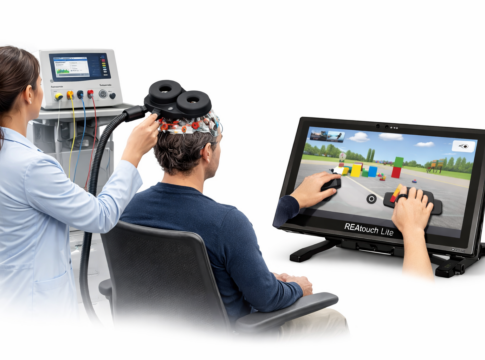
Améliorer la récupération motrice du bras après un AVC
Stimuler les réseaux cérébraux pour la récupération
INSPIRE utilise une technique de stimulation cérébrale non invasive pour activer les zones clés du cerveau impliquées...

Restaurer le mouvement après une paralysie
Stimulation électrique de la moëlle épinière
Un réseau d’électrodes implantables, connecté à un stimulateur implanté, délivre des impulsions électriques aux différents nerfs spinaux.
Chaque...
Comment les souvenirs évoluent-ils avec le temps ?
Une fenêtre sur le cerveau
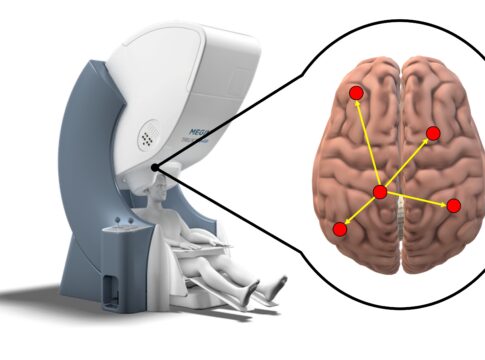
La magnétoencéphalographie (MEG) nous permet d’enregistrer l’activité neuronale avec une grande précision spatiale et temporelle.
Nous utilisons cette technique...