

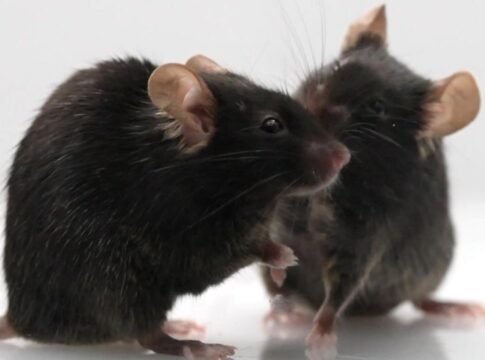
Abstract Cerebral palsy (CP) causes sensorimotor disabilities due to injury to the developing brain. Experimental models do not always induce the CP phenotype completely. Early neurological assessment predicts future impairments and is valuable during development. Using a rodent model characterized by brain injury caused by maternal inflammation and perinatal anoxia, and sensorimotor restriction (experimental cerebral palsy [ECP]), we describe early neurodevelopmental delays by assessing reflexes in a stage corresponding to the brain development of term infants (Postnatal Day [P] 8 in rats). Pregnant Wistar rats were injected with lipopolysaccharide (LPS; 200 μg/kg) ( n = 6) or saline ( n = 4) on Embryonic Days 18/19. Following delivery, 87 male and female pups were used. At P0, injured animals were exposed to anoxia for 20′. From P2 to P21, ECP rats were subjected to hindlimb movement restriction for 16 h/day. ECP group had impaired righting reflex and negative geotaxis and, interestingly, performed home bedding test better than controls. From P7, ECP animals showed decreased body weight compared with controls. Overall, data provide evidence showing that this CP model based on the association of brain damage followed by sensorimotor restriction mimics CP delays and highlights the valuable information given by early neurological assessment during the establishment of the CP phenotype.
Publication scientifique
Early neurodevelopmental reflex impairments in a rodent model of cerebral palsy
Autres publications de la plateforme
Hypothalamic deep brain stimulation augments walking after spinal cord injury
Cho, Newton; Squair, Jordan W.; Aureli, Viviana; James, Nicholas D.; Bole-Feysot, Léa; Dewany, Inssia; Hankov, Nicolas; Baud, Laetitia; Leonhartsberger, Anna; Sveistyte, Kristina; Skinnider, Michael A.; Gautier, Matthieu; Laskaratos, Achilleas; Galan, Katia; Goubran, Maged; Ravier, Jimmy; Merlos, Frederic; Batti, Laura; Pages, Stéphane; Berard, Nadia; Intering, Nadine; Varescon, Camille; Watrin, Anne; Duguet, Léa; Carda, Stefano; Bartholdi, Kay A.; Hutson, Thomas H.; Kathe, Claudia; Hodara, Michael; Anderson, Mark A.; Draganski, Bogdan; Demesmaeker, Robin; Asboth, Leonie; Barraud, Quentin; Bloch, Jocelyne; Courtine, Grégoire
Nature Medicine
A neuronal architecture underlying autonomic dysreflexia
Soriano, Jan Elaine; Hudelle, Remi; Mahe, Lois; Gautier, Matthieu; Teo, Alan Yue Yang; Skinnider, Michael A.; Laskaratos, Achilleas; Ceto, Steven; Kathe, Claudia; Hutson, Thomas; Charbonneau, Rebecca; Girgis, Fady; Casha, Steve; Rimok, Julien; Tso, Marcus; Larkin-Kaiser, Kelly; Hankov, Nicolas; Gandhi, Aasta; Amir, Suje; Kang, Xiaoyang; Vyza, Yashwanth; Martin-Moraud, Eduardo; Lacour, Stephanie; Demesmaeker, Robin; Asboth, Leonie; Barraud, Quentin; Anderson, Mark A.; Bloch, Jocelyne; Squair, Jordan W.; Phillips, Aaron A.; Courtine, Gregoire
Nature
Dual lineage origins contribute to neocortical astrocyte diversity
Zhou J, Vitali I, Roig-Puiggros S, Javed A, Cantando I, Puglisi M, Bezzi P, Jabaudon D, Mayer C, Bocchi R.
Urolithin A provides cardioprotection and mitochondrial quality enhancement preclinically and improves...
Liu S, Faitg J, Tissot C, Konstantopoulos D, Laws R, Bourdier G, Andreux PA, Davey T, Gallart-Ayala H, Ivanisevic J, Singh A, Rinsch C, Marcinek DJ, D’Amico D.
Regional differences in progenitor metabolism shape brain growth during development
Baumann N, Wagener RJ, Javed A, Conti E, Abe P, Lopes A, Sansevrino R, Lavalley A, Magrinelle, E, Szalai T, Fuciec Dm Ferreira C, Fievre S, Fouassier A, D’amico D, Harshnitz O, Jabaudon D
Journal de publication
International Journal of Developmental Neuroscience
Auteurs:
Ho, Dini; Sanches, Eduardo F.; Sizonenko, Stephane V.
Date de publication:
Plateforme:
Études récentes de la plateforme

Restaurer le mouvement après une paralysie
Stimulation électrique de la moëlle épinière
Un réseau d’électrodes implantables, connecté à un stimulateur implanté, délivre des impulsions électriques aux différents nerfs spinaux.
Chaque...
Décoder les ondes de l’activité cérébrale
Comment nous avons identifié le mécanisme
Nous avons utilisé une technique appelée « optogénétique », qui utilise des impulsions lumineuses pour activer sélectivement le locus...
Neuro-ingénieriePsychologie, neurosciences cellulaires et neurosciences cognitivesSciences affectives
Reconnecter le cerveau social
Rééquilibrer les neuromodulateurs
De nouvelles approches, y compris une stimulation cérébrale ciblée et des traitements à base de psychédéliques contrôlés avec soin, visent à...