

Abstract Abnormal patterns of electrical oscillatory activity have been repeatedly described in adult ADHD. In particular, the alpha rhythm (8-12 Hz), known to be modulated during attention, has previously been considered as candidate biomarker for ADHD. In the present study, we asked adult ADHD patients to self-regulate their own alpha rhythm using neurofeedback (NFB), in order to examine the modulation of alpha oscillations on attentional performance and brain plasticity. Twenty-five adult ADHD patients and 22 healthy controls underwent a 64-channel EEG-recording at resting-state and during a Go/NoGo task, before and after a 30 min-NFB session designed to reduce (desynchronize) the power of the alpha rhythm. Alpha power was compared across conditions and groups, and the effects of NFB were statistically assessed by comparing behavioral and EEG measures pre-to-post NFB. Firstly, we found that relative alpha power was attenuated in our ADHD cohort compared to control subjects at baseline and across experimental conditions, suggesting a signature of cortical hyper-activation. Both groups demonstrated a significant and targeted reduction of alpha power during NFB. Interestingly, we observed a post-NFB increase in resting-state alpha (i.e. rebound) in the ADHD group, which restored alpha power towards levels of the normal population. Importantly, the degree of post-NFB alpha normalisation during the Go/NoGo task correlated with individual improvements in motor inhibition (i.e. reduced commission errors and slower reaction times in NoGo trials) only in the ADHD group. Overall, our findings offer novel supporting evidence implicating alpha oscillations in inhibitory control, as well as their potential role in the homeostatic regulation of cortical excitatory/inhibitory balance. Highlights Resting alpha power is reduced in adult ADHD suggesting cortical hyper-activation Adult ADHD patients successfully reduce alpha power during neurofeedback A post-neurofeedback rebound normalizes alpha power in adult ADHD Alpha power rebound correlates with improvement of inhibitory control in adult ADHD
Publication scientifique
Linking alpha oscillations, attention and inhibitory control in adult ADHD with EEG neurofeedback
Autres publications de la plateforme
Linguistic pitch is hierarchically encoded in the right ventral stream
Oderbolz, Chantal; Orpella, Joan; Meyer, Martin
Communications Biology
EEG microstates: from methodological foundations to clinical translation
Michel, Christoph M.; Bréchet, Lucie
Trends in Neurosciences
Real-time reinforcement for human-machine interface control
Vassiliadis, Pierre; Pinheiro, Daniel Leal; Fleury, Lisa; Zenon, Alexandre; Esparza-Iaizzo, Martín; Ingster, Abigaïl; Micera, Silvestro; Shokur, Solaiman; Hummel, Friedhelm C.
Neuron
Characterising the Diffusion Functional Signature of Negative BOLD With Interleaved TMS...
De Riedmatten, Inès; Spencer, Arthur P. C.; Martuzzi, Roberto; Rochas, Vincent; Pérot, Jean‐Baptiste; Szczepankiewicz, Filip; Jelescu, Ileana O.
Human Brain Mapping
Visual perspective taking neural processing in forensic cases with high density...
Rochas, Vincent; Montandon, Marie-Louise; Rodriguez, Cristelle; Herrmann, François R.; Eytan, Ariel; Pegna, Alan J.; Michel, Christoph M.; Giannakopoulos, Panteleimon
Scientific Reports
Causal disconnectomics of motion perception networks: insights from transcranial magnetic stimulation‐induced...
Raffin, Estelle; Salamanca‐Giron, Roberto F.; Huxlin, Krystel R.; Reynaud, Olivier; Mattera, Loan; Martuzzi, Roberto; Hummel, Friedhelm C.
The Journal of Physiology
Journal de publication
Auteurs:
Deiber, Marie-Pierre; Hasler, Roland; Colin, Julien; Dayer, Alexandre; Aubry, Jean-Michel; Baggio, Stéphanie; Perroud, Nader; Ros, Tomas
Date de publication:
Plateforme:
Études récentes de la plateforme
Perte de conscience de soi
Eveiller la prise de conscience
Les troubles de la conscience de soi ne sont pas tous immédiatement perceptibles : certains restent masqués lors d'un...
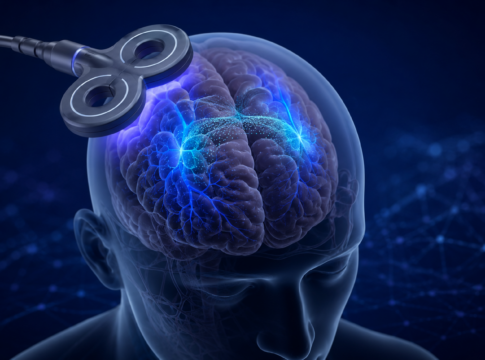
Quand le cerveau s’éteint à l’IRM : un signal plus complexe...
Quand une diminution du signal reste difficile à interpréter
L’imagerie par résonance magnétique fonctionnelle (IRMf) permet de repérer les régions du cerveau qui réagissent...
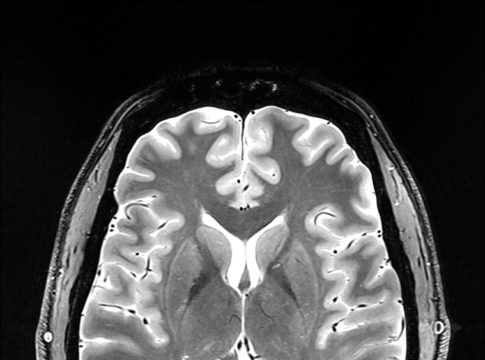
La connaissance comme récompense
Comparaison de différents types de récompenses
Les participants prennent part à une tâche comprenant trois types de récompenses, de valeur élevée ou faible :
-...