


Abstract Response to antipsychotic medications (AP) is subjected to a wide and unpredictable variability and efforts were directed to discover predictive biomarkers to personalize treatment. Electroencephalography abnormalities in subjects with schizophrenia are well established, as well as a pattern of EEG changes induced by APs. The aim of this review is to provide a synthesis of the EEG features that are related to AP efficacy, including both pre-treatment signatures and changes induced by APs during treatment. A systematic review of English articles using PubMed, PsychINFO and the Cochrane database of systematic reviews was undertaken until july 2023. Additional studies were added by hand search. Studies having as an endpoint the relationship between AP-related clinical improvement and electroencephalographic features were included. Heterogeneity prevented a quantitative synthesis. Out of 1232 records screened, 22 studies were included in a final qualitative synthesis. Included studies evaluated resting-state and task-related power spectra, functional connectivity, microstates and epileptic abnormalities. At pre-treatment resting-state EEG, the most relevant predictors of a poor response were a change in theta power compared to healthy control, a high alpha power and connectivity, and diminished beta power. Considering EEG during treatment, an increased theta power, a reduced beta-band activity, an increased alpha activity, a decreased coherence in theta, alpha and beta-band were related to a favorable outcome. EEG is promising as a method to create a predictive biomarker for response to APs; further investigations are warranted to harmonize and generalize the contradictory results of reviewed studies.
Publication scientifique
Pharmaco-EEG of antipsychotic treatment response: a systematic review
Autres publications de la plateforme
Linguistic pitch is hierarchically encoded in the right ventral stream
Oderbolz, Chantal; Orpella, Joan; Meyer, Martin
Communications Biology
EEG microstates: from methodological foundations to clinical translation
Michel, Christoph M.; Bréchet, Lucie
Trends in Neurosciences
Real-time reinforcement for human-machine interface control
Vassiliadis, Pierre; Pinheiro, Daniel Leal; Fleury, Lisa; Zenon, Alexandre; Esparza-Iaizzo, Martín; Ingster, Abigaïl; Micera, Silvestro; Shokur, Solaiman; Hummel, Friedhelm C.
Neuron
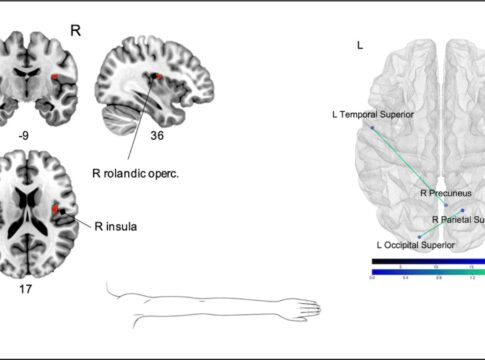
Characterising the Diffusion Functional Signature of Negative BOLD With Interleaved TMS...
De Riedmatten, Inès; Spencer, Arthur P. C.; Martuzzi, Roberto; Rochas, Vincent; Pérot, Jean‐Baptiste; Szczepankiewicz, Filip; Jelescu, Ileana O.
Human Brain Mapping
Visual perspective taking neural processing in forensic cases with high density...
Rochas, Vincent; Montandon, Marie-Louise; Rodriguez, Cristelle; Herrmann, François R.; Eytan, Ariel; Pegna, Alan J.; Michel, Christoph M.; Giannakopoulos, Panteleimon
Scientific Reports
Causal disconnectomics of motion perception networks: insights from transcranial magnetic stimulation‐induced...
Raffin, Estelle; Salamanca‐Giron, Roberto F.; Huxlin, Krystel R.; Reynaud, Olivier; Mattera, Loan; Martuzzi, Roberto; Hummel, Friedhelm C.
The Journal of Physiology
Journal de publication
Schizophrenia
Auteurs:
De Pieri, Marco; Rochas, Vincent; Sabe, Michel; Michel, Cristoph; Kaiser, Stefan
Date de publication:
Plateforme:
Études récentes de la plateforme
Perte de conscience de soi
Eveiller la prise de conscience
Les troubles de la conscience de soi ne sont pas tous immédiatement perceptibles : certains restent masqués lors d'un...
Quand le cerveau s’éteint à l’IRM : un signal plus complexe...
Quand une diminution du signal reste difficile à interpréter
L’imagerie par résonance magnétique fonctionnelle (IRMf) permet de repérer les régions du cerveau qui réagissent...
La connaissance comme récompense
Comparaison de différents types de récompenses
Les participants prennent part à une tâche comprenant trois types de récompenses, de valeur élevée ou faible :
-...