

Magnetic resonance spectroscopy (MRS) and magnetic resonance spectroscopic imaging (MRSI), are non-invasive techniques used to quantify biochemical compounds in tissue, such as choline, creatine, glutamate, glutamine, γ -aminobutyric acid, N-acetylaspartate, etc. However, reliable quantification of MRS and MRSI data is challenging due to the complex processing steps involved, often requiring advanced expertise. Existing data processing software solutions often demand MRS expertise or coding knowledge, presenting a steep learning curve for novel users. Mastering these tools typically requires a long training time, which can be a barrier for users with limited technical backgrounds. To address these challenges and create a tool that serves researchers using MRS/MRSI with a broad range of backgrounds, we developed MRSpecLAB—an open-access, user-friendly software platform for MRS and MRSI data analysis. MRSpecLAB is designed for easy installation and features an intuitive graphical pipeline editor that supports both predefined and customizable workflows. It also serves as a platform offering standardized pipelines while allowing users to integrate in-house functions for additional flexibility. Importantly, MRSpecLAB is envisioned as an open platform beyond the MRS community, bridging the gap between technical experts and practitioners. It facilitates contributions, collaboration, and the sharing of data workflows and processing methodologies for diverse MRS/MRSI applications, supporting reproducibility practices.
Publication scientifique
A graphical pipeline platform for MRS data processing and analysis: MRSpecLAB
Autres publications de la plateforme
Causal disconnectomics of motion perception networks: insights from transcranial magnetic stimulation‐induced...
Raffin, Estelle; Salamanca‐Giron, Roberto F.; Huxlin, Krystel R.; Reynaud, Olivier; Mattera, Loan; Martuzzi, Roberto; Hummel, Friedhelm C.
The Journal of Physiology
Boosting hemianopia recovery: the power of interareal cross-frequency brain stimulation
Raffin, Estelle; Bevilacqua, Michele; Windel, Fabienne; Menoud, Pauline; Salamanca-Giron, Roberto F; Feroldi, Sarah; Zandvliet, Sarah B; Ramdass, Nicola; Draaisma, Laurijn; Vuilleumier, Patrik; Guggisberg, Adrian G; Bonvin, Christophe; Fleury, Lisa; Huxlin, Krystel R; Beanato, Elena; Hummel, Friedhelm C
Brain
Brain activation for language and its relationship to cognitive and linguistic...
Balboni, Irene; Rampinini, Alessandra; Kepinska, Olga; Berthele, Raphael; Golestani, Narly
Cerebral Cortex
Resting-state functional connectivity abnormalities in subjective cognitive decline: A 7T MRI...
Pievani, M.; Ribaldi, F.; Toussas, K.; Da Costa, S.; Jorge, J.; Reynaud, O.; Chicherio, C.; Blouin, J.L.; Scheffler, M.; Garibotto, V.; Jovicich, J.; Jelescu, I.O.; Frisoni, G.B.
Neurobiology of Aging
Translational research approach to social orienting deficits in autism: the role...
Contestabile, Alessandro; Kojovic, Nada; Casarotto, Giulia; Delavari, Farnaz; Hagmann, Patric; Schaer, Marie; Bellone, Camilla
Molecular Psychiatry
EEG correlates of egocentric and altercentric biases in forensic cases with...
Rochas, Vincent; Montandon, Marie-Louise; Rodriguez, Cristelle; Herrmann, François R.; Eytan, Ariel; Pegna, Alan J.; Michel, Christoph M.; Giannakopoulos, Panteleimon
Frontiers in Neuroscience
Journal de publication
Frontiers in Neuroimaging
Auteurs:
Xiao, Ying; Kaiser, Antonia; Kockisch, Matthias; Back, Alex; Carlet, Robin; Liu, Xinyu; Huang, Zhiwei; Döring, André; Widmaier, Mark; Xin, Lijing
Date de publication:
Plateforme:
Études récentes de la plateforme
La connaissance comme récompense
Comparaison de différents types de récompenses
Les participants prennent part à une tâche comprenant trois types de récompenses, de valeur élevée ou faible :
-...
Réseaux cérébraux de la mémoire dans l’épilepsie
Cartographie multimodale des réseaux cérébraux
Combinaison de l'EEG, de l'IRM à champ ultra-élevé et de modèles animaux
Ce projet vise à identifier les marqueurs...
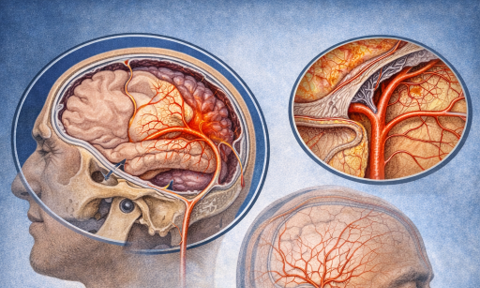
Réduire les récidives d’hématomes sous-duraux chroniques
La MMA est-elle vraiment responsable ?
Si de nouvelles données confirment le rôle de la MMA dans le saignement, l'efficacité de l'embolisation de la...