

Abstract Visual field loss is a common consequence of stroke and manifests in approximatively one-third of patients in the chronic stage. Such loss can significantly impact daily life activities, compromising tasks such as reading, navigating or driving. Although slow and labour intensive, evidence suggests that early interventions with tailored rehabilitation programmes might stimulate visual recovery and improve quality of life in stroke survivors. To enhance the effects of such rehabilitation programmes, we designed a novel, non-invasive, pathway-specific, physiology-inspired cross-frequency brain stimulation protocol, where complex oscillatory signal integration was inferred from phase–amplitude coupling of oscillatory signals between the primary visual cortex and the motion-sensitive medio-temporal area. Sixteen stroke patients were enrolled in a double-blind, randomized, cross-over trial, during which they performed two blocks of 10 daily training sessions of a direction discrimination task, combined with one of the two cross-frequency transcranial alternative brain stimulation (cf-tACS versus control cf-tACS) conditions. We found that the cf-tACS condition promoting feedforward visual inputs to the medio-temporal area significantly enhanced motion discrimination performance and shifted visual field borders (i.e. through localized enlargement of isopters). Behavioural improvements associated with a change in oscillatory activity within motion processing pathways were proportional to the amount of residual structural fibres along these pathways and perilesional primary visual cortex activity. In sum, we report, for the first time, that cf-tACS, a novel, pathway-specific, physiology-inspired brain stimulation approach, is able to boost the efficacy of perceptual training, restoring visual motion processing and reducing the severity of visual impairments in adult stroke patients.
Publication scientifique
Boosting hemianopia recovery: the power of interareal cross-frequency brain stimulation
Autres publications de la plateforme
Causal disconnectomics of motion perception networks: insights from transcranial magnetic stimulation‐induced...
Raffin, Estelle; Salamanca‐Giron, Roberto F.; Huxlin, Krystel R.; Reynaud, Olivier; Mattera, Loan; Martuzzi, Roberto; Hummel, Friedhelm C.
The Journal of Physiology
Return of the GEDAI: Unsupervised EEG Denoising based on Leadfield Filtering
Ros, Tomas; Férat, Victor; Huang, Yingqi; Colangelo, Cristina; Kia, Seyed Mostafa; Wolfers, Thomas; Vulliemoz, Serge; Michela, Abele
Multivariate deep phenotyping reveals behavioral correlates of non-restorative sleep in 22q11.2...
Reich, Natacha; Imparato, Andrea; Cataldi, Jacinthe; Thillainathan, Niveettha; Delavari, Farnaz; Schneider, Maude; Eliez, Stephan; Siclari, Francesca; Sandini, Corrado
Psychiatry Research
EEG microstate D as psychosis-specific correlate in adolescents and young adults...
Liebrand, Matthias; Katsarakis, Angelos; Josi, Johannes; Diezig, Sarah; Michel, Chantal; Schultze-Lutter, Frauke; Rochas, Vincent; Mancini, Valentina; Kaess, Michael; Hubl, Daniela; Koenig, Thomas; Kindler, Jochen
Schizophrenia Research
EEG correlates of egocentric and altercentric biases in forensic cases with...
Rochas, Vincent; Montandon, Marie-Louise; Rodriguez, Cristelle; Herrmann, François R.; Eytan, Ariel; Pegna, Alan J.; Michel, Christoph M.; Giannakopoulos, Panteleimon
Frontiers in Neuroscience
EEG microstates, acute phase negative symptoms of schizophrenia and antipsychotic treatment...
De Pieri, Marco; Rochas, Vincent; Apostolopoulou, Dafni; Kirschner, Matthias; Sabe, Michel; Bartolomei, Javier; Bègue, Indrit; Koenig, Thomas; Kaiser, Stefan
Progress in Neuro-Psychopharmacology and Biological Psychiatry
Journal de publication
Brain
Auteurs:
Raffin, Estelle; Bevilacqua, Michele; Windel, Fabienne; Menoud, Pauline; Salamanca-Giron, Roberto F; Feroldi, Sarah; Zandvliet, Sarah B; Ramdass, Nicola; Draaisma, Laurijn; Vuilleumier, Patrik; Guggisberg, Adrian G; Bonvin, Christophe; Fleury, Lisa; Huxlin, Krystel R; Beanato, Elena; Hummel, Friedhelm C
Date de publication:
Plateforme:
Études récentes de la plateforme
La connaissance comme récompense
Comparaison de différents types de récompenses
Les participants prennent part à une tâche comprenant trois types de récompenses, de valeur élevée ou faible :
-...
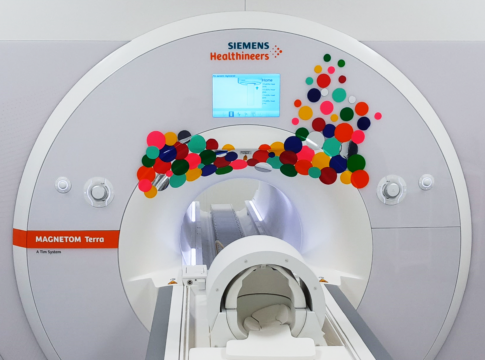
Réseaux cérébraux de la mémoire dans l’épilepsie
Cartographie multimodale des réseaux cérébraux
Combinaison de l'EEG, de l'IRM à champ ultra-élevé et de modèles animaux
Ce projet vise à identifier les marqueurs...
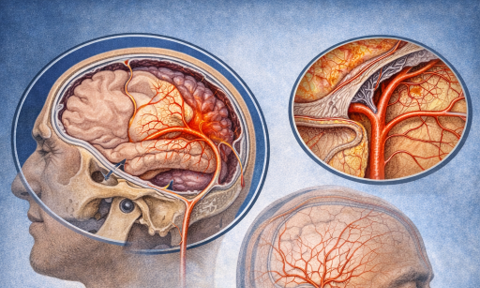
Réduire les récidives d’hématomes sous-duraux chroniques
La MMA est-elle vraiment responsable ?
Si de nouvelles données confirment le rôle de la MMA dans le saignement, l'efficacité de l'embolisation de la...