
Abstract Language learning and use relies on domain-specific, domain-general cognitive and sensory-motor functions. Using fMRI during story listening and behavioral tests, we investigated brain-behavior associations between linguistic and non-linguistic measures in individuals with varied multilingual experience and reading skills, including typical reading participants (TRs) and dyslexic readers (DRs). Partial Least Square Correlation revealed a main component linking cognitive, linguistic, and phonological measures to amodal/associative brain areas. A second analysis only in TRs revealed a stronger association between cognitive, linguistic, literacy and phonological skills within the same brain network as in the full sample, suggesting better speech-print convergence in TRs. In this sample, an additional component involving speed, automatization, and lexical access was associated with less involvement in unimodal, lower-level auditory, and motor brain areas. The complementarity between the two components likely reflects TRs’ reduced reliance on lower-level sensorimotor regions and greater engagement of higher-level cortices and skills. Overall, our work suggests convergence between behavioral measures of linguistic, domain-general cognitive and domain-specific non-linguistic skill, and between these behavioral measures and neural processing of language. This convergence is greater in TRs, suggesting more integrated processing in this group. Our work advocates a comprehensive, multimodal approach to understanding individual differences in language abilities and experience.
Publication scientifique
Brain activation for language and its relationship to cognitive and linguistic measures
Autres publications de la plateforme
Causal disconnectomics of motion perception networks: insights from transcranial magnetic stimulation‐induced...
Raffin, Estelle; Salamanca‐Giron, Roberto F.; Huxlin, Krystel R.; Reynaud, Olivier; Mattera, Loan; Martuzzi, Roberto; Hummel, Friedhelm C.
The Journal of Physiology
Boosting hemianopia recovery: the power of interareal cross-frequency brain stimulation
Raffin, Estelle; Bevilacqua, Michele; Windel, Fabienne; Menoud, Pauline; Salamanca-Giron, Roberto F; Feroldi, Sarah; Zandvliet, Sarah B; Ramdass, Nicola; Draaisma, Laurijn; Vuilleumier, Patrik; Guggisberg, Adrian G; Bonvin, Christophe; Fleury, Lisa; Huxlin, Krystel R; Beanato, Elena; Hummel, Friedhelm C
Brain
A graphical pipeline platform for MRS data processing and analysis: MRSpecLAB
Xiao, Ying; Kaiser, Antonia; Kockisch, Matthias; Back, Alex; Carlet, Robin; Liu, Xinyu; Huang, Zhiwei; Döring, André; Widmaier, Mark; Xin, Lijing
Frontiers in Neuroimaging
Resting-state functional connectivity abnormalities in subjective cognitive decline: A 7T MRI...
Pievani, M.; Ribaldi, F.; Toussas, K.; Da Costa, S.; Jorge, J.; Reynaud, O.; Chicherio, C.; Blouin, J.L.; Scheffler, M.; Garibotto, V.; Jovicich, J.; Jelescu, I.O.; Frisoni, G.B.
Neurobiology of Aging
Translational research approach to social orienting deficits in autism: the role...
Contestabile, Alessandro; Kojovic, Nada; Casarotto, Giulia; Delavari, Farnaz; Hagmann, Patric; Schaer, Marie; Bellone, Camilla
Molecular Psychiatry
EEG correlates of egocentric and altercentric biases in forensic cases with...
Rochas, Vincent; Montandon, Marie-Louise; Rodriguez, Cristelle; Herrmann, François R.; Eytan, Ariel; Pegna, Alan J.; Michel, Christoph M.; Giannakopoulos, Panteleimon
Frontiers in Neuroscience
Journal de publication
Cerebral Cortex
Auteurs:
Balboni, Irene; Rampinini, Alessandra; Kepinska, Olga; Berthele, Raphael; Golestani, Narly
Date de publication:
Plateforme:
Études récentes de la plateforme
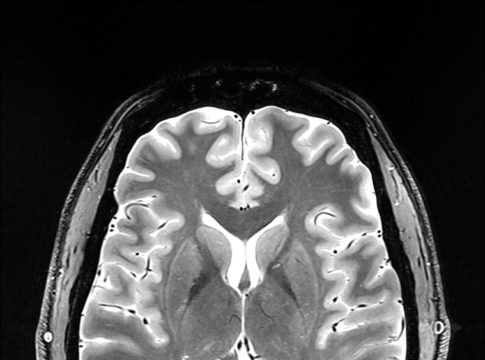
La connaissance comme récompense
Comparaison de différents types de récompenses
Les participants prennent part à une tâche comprenant trois types de récompenses, de valeur élevée ou faible :
-...
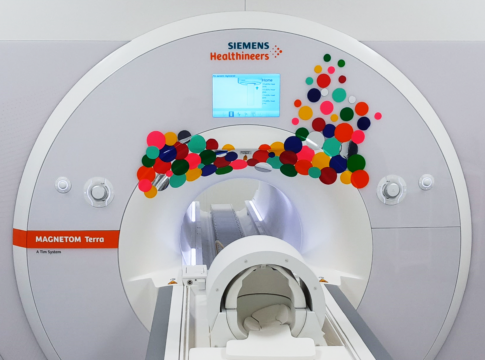
Réseaux cérébraux de la mémoire dans l’épilepsie
Cartographie multimodale des réseaux cérébraux
Combinaison de l'EEG, de l'IRM à champ ultra-élevé et de modèles animaux
Ce projet vise à identifier les marqueurs...
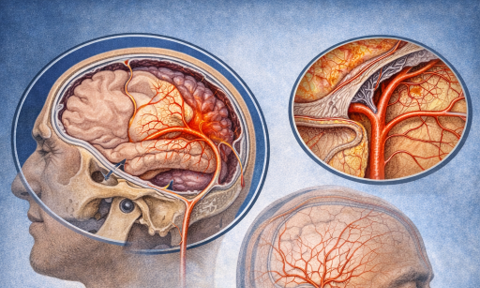
Réduire les récidives d’hématomes sous-duraux chroniques
La MMA est-elle vraiment responsable ?
Si de nouvelles données confirment le rôle de la MMA dans le saignement, l'efficacité de l'embolisation de la...