

Abstract Healthy aging often entails a decline in cognitive and motor functions, affecting independence and quality of life in older adults. Brain stimulation shows potential to enhance these functions, but studies show variable effects. Previous studies have tried to identify responders and non-responders through correlations between behavioral change and baseline parameters, but results lack generalization to independent cohorts. We propose a method to predict an individual’s likelihood of benefiting from stimulation, based on baseline performance of a sequential motor task. Our results show that individuals with less efficient learning mechanisms benefit from stimulation, while those with optimal learning strategies experience none or even detrimental effects. This differential effect, first identified in a public dataset and replicated here in an independent cohort, was linked to one’s ability to integrate task-relevant information and not age. This study constitutes a further step towards personalized clinical-translational interventions based on brain stimulation.
Publication scientifique
Native learning ability and not age determines the effects of brain stimulation
Autres publications de la plateforme
Linguistic pitch is hierarchically encoded in the right ventral stream
Oderbolz, Chantal; Orpella, Joan; Meyer, Martin
Communications Biology
EEG microstates: from methodological foundations to clinical translation
Michel, Christoph M.; Bréchet, Lucie
Trends in Neurosciences
Real-time reinforcement for human-machine interface control
Vassiliadis, Pierre; Pinheiro, Daniel Leal; Fleury, Lisa; Zenon, Alexandre; Esparza-Iaizzo, Martín; Ingster, Abigaïl; Micera, Silvestro; Shokur, Solaiman; Hummel, Friedhelm C.
Neuron
Characterising the Diffusion Functional Signature of Negative BOLD With Interleaved TMS...
De Riedmatten, Inès; Spencer, Arthur P. C.; Martuzzi, Roberto; Rochas, Vincent; Pérot, Jean‐Baptiste; Szczepankiewicz, Filip; Jelescu, Ileana O.
Human Brain Mapping
Pharmaco-EEG of antipsychotic treatment response: a systematic review
De Pieri, Marco; Rochas, Vincent; Sabe, Michel; Michel, Cristoph; Kaiser, Stefan
Schizophrenia
EEG microstate D as psychosis-specific correlate in adolescents and young adults...
Liebrand, Matthias; Katsarakis, Angelos; Josi, Johannes; Diezig, Sarah; Michel, Chantal; Schultze-Lutter, Frauke; Rochas, Vincent; Mancini, Valentina; Kaess, Michael; Hubl, Daniela; Koenig, Thomas; Kindler, Jochen
Schizophrenia Research
Journal de publication
npj Science of Learning
Auteurs:
Maceira-Elvira, Pablo; Popa, Traian; Schmid, Anne-Christine; Cadic-Melchior, Andéol; Müller, Henning; Schaer, Roger; Cohen, Leonardo G.; Hummel, Friedhelm C.
Date de publication:
Plateforme:
Études récentes de la plateforme
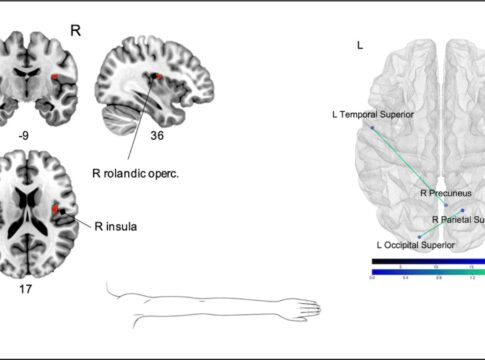
Perte de conscience de soi
Eveiller la prise de conscience
Les troubles de la conscience de soi ne sont pas tous immédiatement perceptibles : certains restent masqués lors d'un...
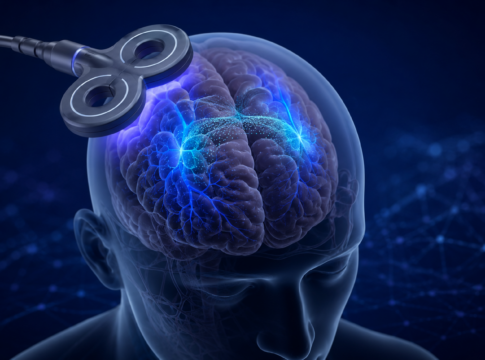
Quand le cerveau s’éteint à l’IRM : un signal plus complexe...
Quand une diminution du signal reste difficile à interpréter
L’imagerie par résonance magnétique fonctionnelle (IRMf) permet de repérer les régions du cerveau qui réagissent...
La connaissance comme récompense
Comparaison de différents types de récompenses
Les participants prennent part à une tâche comprenant trois types de récompenses, de valeur élevée ou faible :
-...