

Neurodevelopmental disorders such as attention deficit and/or hyperactivity disorder (ADHD) and schizophrenia are characterized by core impairment in executive functions (EF). Despite the development of various behavioral interventions to enhance EF, the evidence is still scarce. Alternatively, non-invasive brain stimulation tools such as transcranial alternating current stimulation (tACS) has emerged as a potential strategy to alleviate cognitive deficits. Previous studies have demonstrated the safety, feasibility, and efficacy of one single tACS session in different clinical populations. However, the effects of tACS appear limited and need to be sustained to be considered an effective cognitive neurorehabilitation tool. Recent studies have used home-based, repeated tACS sessions in individuals with neurodegenerative diseases. To our knowledge, the safety and feasibility of such an intensive protocol remains to be tested in a younger population with neurodevelopmental disorders. Using a randomized double-blind sham-controlled design, we administered home-based, repeated tACS sessions to seven individuals aged 14–25 with 22q11.2 deletion syndrome (22q11.2DS), which confers an increased risk for neurodevelopmental disorders. We aimed to assess the safety, tolerability, and feasibility of tACS. Findings from this ongoing clinical trial revealed a favorable safety profile, with frequent yet transient and mainly mild adverse effects. The intervention proved to be feasible, shown by very high adherence rates and positive user experiences. Future studies should therefore investigate whether prolonged exposure to tACS can lead to long-lasting cognitive outcomes. Clinical trial registration ClinicalTrials.gov , identifier NCT05664412.
Publication scientifique
Safety and feasibility of home-based transcranial alternating current stimulation in youths with 22q11.2 deletion syndrome
Autres publications de la plateforme
Causal disconnectomics of motion perception networks: insights from transcranial magnetic stimulation‐induced...
Raffin, Estelle; Salamanca‐Giron, Roberto F.; Huxlin, Krystel R.; Reynaud, Olivier; Mattera, Loan; Martuzzi, Roberto; Hummel, Friedhelm C.
The Journal of Physiology
Boosting hemianopia recovery: the power of interareal cross-frequency brain stimulation
Raffin, Estelle; Bevilacqua, Michele; Windel, Fabienne; Menoud, Pauline; Salamanca-Giron, Roberto F; Feroldi, Sarah; Zandvliet, Sarah B; Ramdass, Nicola; Draaisma, Laurijn; Vuilleumier, Patrik; Guggisberg, Adrian G; Bonvin, Christophe; Fleury, Lisa; Huxlin, Krystel R; Beanato, Elena; Hummel, Friedhelm C
Brain
A graphical pipeline platform for MRS data processing and analysis: MRSpecLAB
Xiao, Ying; Kaiser, Antonia; Kockisch, Matthias; Back, Alex; Carlet, Robin; Liu, Xinyu; Huang, Zhiwei; Döring, André; Widmaier, Mark; Xin, Lijing
Frontiers in Neuroimaging
Brain activation for language and its relationship to cognitive and linguistic...
Balboni, Irene; Rampinini, Alessandra; Kepinska, Olga; Berthele, Raphael; Golestani, Narly
Cerebral Cortex
Resting-state functional connectivity abnormalities in subjective cognitive decline: A 7T MRI...
Pievani, M.; Ribaldi, F.; Toussas, K.; Da Costa, S.; Jorge, J.; Reynaud, O.; Chicherio, C.; Blouin, J.L.; Scheffler, M.; Garibotto, V.; Jovicich, J.; Jelescu, I.O.; Frisoni, G.B.
Neurobiology of Aging
Translational research approach to social orienting deficits in autism: the role...
Contestabile, Alessandro; Kojovic, Nada; Casarotto, Giulia; Delavari, Farnaz; Hagmann, Patric; Schaer, Marie; Bellone, Camilla
Molecular Psychiatry
Journal de publication
Frontiers in Neuroscience
Auteurs:
Latrèche, Caren; Mancini, Valentina; McGinn, Nova; Rochas, Vincent; Férat, Victor; Forrer, Silas; Schneider, Maude; Eliez, Stephan
Date de publication:
Plateforme:
Études récentes de la plateforme
La connaissance comme récompense
Comparaison de différents types de récompenses
Les participants prennent part à une tâche comprenant trois types de récompenses, de valeur élevée ou faible :
-...
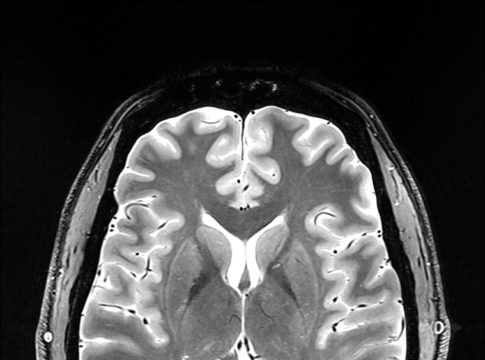
Réseaux cérébraux de la mémoire dans l’épilepsie
Cartographie multimodale des réseaux cérébraux
Combinaison de l'EEG, de l'IRM à champ ultra-élevé et de modèles animaux
Ce projet vise à identifier les marqueurs...
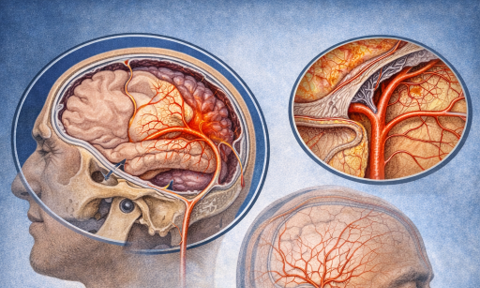
Réduire les récidives d’hématomes sous-duraux chroniques
La MMA est-elle vraiment responsable ?
Si de nouvelles données confirment le rôle de la MMA dans le saignement, l'efficacité de l'embolisation de la...