


Axon regeneration can be induced across anatomically complete spinal cord injury (SCI), but robust functional restoration has been elusive. Whether restoring neurological functions requires directed regeneration of axons from specific neuronal subpopulations to their natural target regions remains unclear. To address this question, we applied projection-specific and comparative single-nucleus RNA sequencing to identify neuronal subpopulations that restore walking after incomplete SCI. We show that chemoattracting and guiding the transected axons of these neurons to their natural target region led to substantial recovery of walking after complete SCI in mice, whereas regeneration of axons simply across the lesion had no effect. Thus, reestablishing the natural projections of characterized neurons forms an essential part of axon regeneration strategies aimed at restoring lost neurological functions. , Editor’s summary Although several experimental approaches have shown positive results in axonal regeneration after spinal cord injury (SCI), complete recovery of motor functions remains an elusive target. Squair et al . hypothesized that restoration of complete axonal projection of a selected neuronal population to their natural target could promote better functional recovery. After using single-cell RNA sequencing to identify the most promising neuronal population, the authors showed that promoting axonal growth and path guidance to their natural target in this population restored walking in mice after complete SCI. By contrast, broad axonal restoration across the lesion had no effect, suggesting that a more targeted approach is necessary for functional recovery after SCI. —Mattia Maroso , Restoring axonal projections of selected neurons to their target is critical for functional recovery after spinal cord injury in mice.
Publication scientifique
Recovery of walking after paralysis by regenerating characterized neurons to their natural target region
Autres publications de la plateforme
Hypothalamic deep brain stimulation augments walking after spinal cord injury
Cho, Newton; Squair, Jordan W.; Aureli, Viviana; James, Nicholas D.; Bole-Feysot, Léa; Dewany, Inssia; Hankov, Nicolas; Baud, Laetitia; Leonhartsberger, Anna; Sveistyte, Kristina; Skinnider, Michael A.; Gautier, Matthieu; Laskaratos, Achilleas; Galan, Katia; Goubran, Maged; Ravier, Jimmy; Merlos, Frederic; Batti, Laura; Pages, Stéphane; Berard, Nadia; Intering, Nadine; Varescon, Camille; Watrin, Anne; Duguet, Léa; Carda, Stefano; Bartholdi, Kay A.; Hutson, Thomas H.; Kathe, Claudia; Hodara, Michael; Anderson, Mark A.; Draganski, Bogdan; Demesmaeker, Robin; Asboth, Leonie; Barraud, Quentin; Bloch, Jocelyne; Courtine, Grégoire
Nature Medicine
A neuronal architecture underlying autonomic dysreflexia
Soriano, Jan Elaine; Hudelle, Remi; Mahe, Lois; Gautier, Matthieu; Teo, Alan Yue Yang; Skinnider, Michael A.; Laskaratos, Achilleas; Ceto, Steven; Kathe, Claudia; Hutson, Thomas; Charbonneau, Rebecca; Girgis, Fady; Casha, Steve; Rimok, Julien; Tso, Marcus; Larkin-Kaiser, Kelly; Hankov, Nicolas; Gandhi, Aasta; Amir, Suje; Kang, Xiaoyang; Vyza, Yashwanth; Martin-Moraud, Eduardo; Lacour, Stephanie; Demesmaeker, Robin; Asboth, Leonie; Barraud, Quentin; Anderson, Mark A.; Bloch, Jocelyne; Squair, Jordan W.; Phillips, Aaron A.; Courtine, Gregoire
Nature
A soft, scalable and adaptable multi-contact cuff electrode for targeted peripheral...
Paggi, Valentina; Fallegger, Florian; Serex, Ludovic; Rizzo, Olivier; Galan, Katia; Giannotti, Alice; Furfaro, Ivan; Zinno, Ciro; Bernini, Fabio; Micera, Silvestro; Lacour, Stéphanie P
Bioelectronic Medicine
Epileptiform activity in brain organoids derived from patient with Glucose Transporter...
Müller, Yoann; Lengacher, Loïc; Friscourt, Fabien; Quairiaux, Charles; Stoppini, Luc; Magistretti, Pierre J; Lengacher, Sylvain; Finsterwald, Charles
Frontiers in Neuroscience
Hypothalamic deep brain stimulation augments walking after spinal cord injury.
Cho, Newton; Squair, Jordan W; Aureli, Viviana; James, Nicholas D; Bole-Feysot, Léa; Dewany, Inssia; Hankov, Nicolas; Baud, Laetitia; Leonhartsberger, Anna; Sveistyte, Kristina; Skinnider, Michael A; Gautier, Matthieu; Laskaratos, Achilleas; Galan, Katia; Goubran, Maged; Ravier, Jimmy; Merlos, Frederic; Batti, Laura; Pagès, Stéphane; Berard, Nadia; Intering, Nadine; Varescon, Camille; Watrin, Anne; Duguet, Léa; Carda, Stefano; Bartholdi, Kay A; Hutson, Thomas H; Kathe, Claudia; Hodara, Michael; Anderson, Mark A; Draganski, Bogdan; Demesmaeker, Robin; Asboth, Léonie; Barraud, Quentin; Bloch, Jocelyne; Courtine, Grégoire
Nature Medicine
Dual lineage origins contribute to neocortical astrocyte diversity
Zhou J, Vitali I, Roig-Puiggros S, Javed A, Cantando I, Puglisi M, Bezzi P, Jabaudon D, Mayer C, Bocchi R.
Journal de publication
Science
Auteurs:
Squair, Jordan W.; Milano, Marco; De Coucy, Alexandra; Gautier, Matthieu; Skinnider, Michael A.; James, Nicholas D.; Cho, Newton; Lasne, Anna; Kathe, Claudia; Hutson, Thomas H.; Ceto, Steven; Baud, Laetitia; Galan, Katia; Aureli, Viviana; Laskaratos, Achilleas; Barraud, Quentin; Deming, Timothy J.; Kohman, Richie E.; Schneider, Bernard L.; He, Zhigang; Bloch, Jocelyne; Sofroniew, Michael V.; Courtine, Gregoire; Anderson, Mark A.
Date de publication:
Plateforme:
Études récentes de la plateforme
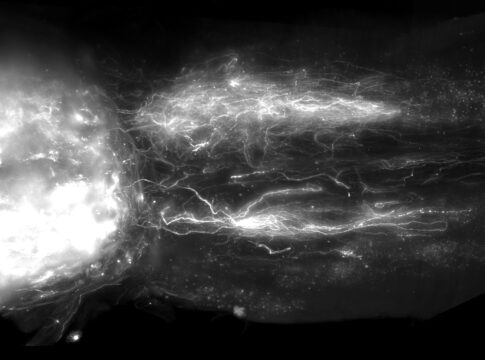
Réparer les lésions de la moelle épinière
Cibler les neurones qui rétablissent la marche
À l'aide de la transcriptomique unicellulaire et spécifique à la projection, les scientifiques ont découvert une population...

Restaurer le mouvement après une paralysie
Stimulation électrique de la moëlle épinière
Un réseau d’électrodes implantables, connecté à un stimulateur implanté, délivre des impulsions électriques aux différents nerfs spinaux.
Chaque...
Décoder les ondes de l’activité cérébrale
Comment nous avons identifié le mécanisme
Nous avons utilisé une technique appelée « optogénétique », qui utilise des impulsions lumineuses pour activer sélectivement le locus...