

The invasiveness of intracortical interfaces currently used today is responsible for the formation of an intense immunoresponse and inflammatory reaction from neural cells and tissues. This leads to a high concentration of reactive glial cells around the implant site, creating a physical barrier between the neurons and the recording channels. Such a rejection of foreign analog interfaces causes neural signals to fade from recordings which become flooded by background noise after a few weeks. Despite their invasiveness, those devices are required to track single neuron activity and decode fine sensory or motor commands. In particular, such quantitative and long‐lasting recordings of individual neurons are crucial during a long time period (several months) to restore essential functions of the cortex, disrupted after injuries, stroke, or neurodegenerative diseases. To overcome this limitation, graphene and related materials have attracted numerous interests, as they gather in the same material many suitable properties for interfacing living matter, such as an exceptionally high neural affinity, diffusion barrier, and high physical robustness. In this work, the neural affinity of a graphene monolayer with numerous materials commonly used in neuroprostheses is compared, and its impact on the performance and durability of intracortical probes is investigated. For that purpose, an innovative coating method to wrap 3D intracortical probes with a continuous monolayer graphene is developed. Experimental evidence demonstrate the positive impact of graphene on the bioacceptance of conventional intracortical probes, in terms of detection efficiency and tissues responses, allowing real‐time samplings of motor neuron activity during 5 weeks. Since continuous graphene coatings can easily be implemented on a wide range of 3D surfaces, this study further motivates the use of graphene and related materials as it could significantly contribute to reduce the current rejection of neural probes currently used in many research areas, from fundamental neurosciences to medicine and neuroprostheses.
Publication scientifique
Monolayer Graphene Coating of Intracortical Probes for Long‐Lasting Neural Activity Monitoring
Autres publications de la plateforme
Hypothalamic deep brain stimulation augments walking after spinal cord injury
Cho, Newton; Squair, Jordan W.; Aureli, Viviana; James, Nicholas D.; Bole-Feysot, Léa; Dewany, Inssia; Hankov, Nicolas; Baud, Laetitia; Leonhartsberger, Anna; Sveistyte, Kristina; Skinnider, Michael A.; Gautier, Matthieu; Laskaratos, Achilleas; Galan, Katia; Goubran, Maged; Ravier, Jimmy; Merlos, Frederic; Batti, Laura; Pages, Stéphane; Berard, Nadia; Intering, Nadine; Varescon, Camille; Watrin, Anne; Duguet, Léa; Carda, Stefano; Bartholdi, Kay A.; Hutson, Thomas H.; Kathe, Claudia; Hodara, Michael; Anderson, Mark A.; Draganski, Bogdan; Demesmaeker, Robin; Asboth, Leonie; Barraud, Quentin; Bloch, Jocelyne; Courtine, Grégoire
Nature Medicine
A neuronal architecture underlying autonomic dysreflexia
Soriano, Jan Elaine; Hudelle, Remi; Mahe, Lois; Gautier, Matthieu; Teo, Alan Yue Yang; Skinnider, Michael A.; Laskaratos, Achilleas; Ceto, Steven; Kathe, Claudia; Hutson, Thomas; Charbonneau, Rebecca; Girgis, Fady; Casha, Steve; Rimok, Julien; Tso, Marcus; Larkin-Kaiser, Kelly; Hankov, Nicolas; Gandhi, Aasta; Amir, Suje; Kang, Xiaoyang; Vyza, Yashwanth; Martin-Moraud, Eduardo; Lacour, Stephanie; Demesmaeker, Robin; Asboth, Leonie; Barraud, Quentin; Anderson, Mark A.; Bloch, Jocelyne; Squair, Jordan W.; Phillips, Aaron A.; Courtine, Gregoire
Nature
A soft, scalable and adaptable multi-contact cuff electrode for targeted peripheral...
Paggi, Valentina; Fallegger, Florian; Serex, Ludovic; Rizzo, Olivier; Galan, Katia; Giannotti, Alice; Furfaro, Ivan; Zinno, Ciro; Bernini, Fabio; Micera, Silvestro; Lacour, Stéphanie P
Bioelectronic Medicine
Epileptiform activity in brain organoids derived from patient with Glucose Transporter...
Müller, Yoann; Lengacher, Loïc; Friscourt, Fabien; Quairiaux, Charles; Stoppini, Luc; Magistretti, Pierre J; Lengacher, Sylvain; Finsterwald, Charles
Frontiers in Neuroscience
Hypothalamic deep brain stimulation augments walking after spinal cord injury.
Cho, Newton; Squair, Jordan W; Aureli, Viviana; James, Nicholas D; Bole-Feysot, Léa; Dewany, Inssia; Hankov, Nicolas; Baud, Laetitia; Leonhartsberger, Anna; Sveistyte, Kristina; Skinnider, Michael A; Gautier, Matthieu; Laskaratos, Achilleas; Galan, Katia; Goubran, Maged; Ravier, Jimmy; Merlos, Frederic; Batti, Laura; Pagès, Stéphane; Berard, Nadia; Intering, Nadine; Varescon, Camille; Watrin, Anne; Duguet, Léa; Carda, Stefano; Bartholdi, Kay A; Hutson, Thomas H; Kathe, Claudia; Hodara, Michael; Anderson, Mark A; Draganski, Bogdan; Demesmaeker, Robin; Asboth, Léonie; Barraud, Quentin; Bloch, Jocelyne; Courtine, Grégoire
Nature Medicine
Dual lineage origins contribute to neocortical astrocyte diversity
Zhou J, Vitali I, Roig-Puiggros S, Javed A, Cantando I, Puglisi M, Bezzi P, Jabaudon D, Mayer C, Bocchi R.
Journal de publication
Advanced Healthcare Materials
Auteurs:
Bourrier, Antoine; Shkorbatova, Polina; Bonizzato, Marco; Rey, Elodie; Barraud, Quentin; Courtine, Gregoire; Othmen, Riadh; Reita, Valerie; Bouchiat, Vincent; Delacour, Cécile
Date de publication:
Plateforme:
Études récentes de la plateforme
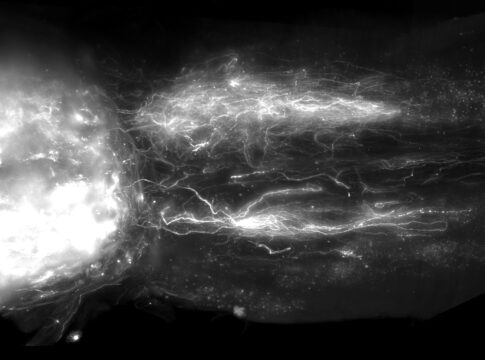
Réparer les lésions de la moelle épinière
Cibler les neurones qui rétablissent la marche
À l'aide de la transcriptomique unicellulaire et spécifique à la projection, les scientifiques ont découvert une population...

Restaurer le mouvement après une paralysie
Stimulation électrique de la moëlle épinière
Un réseau d’électrodes implantables, connecté à un stimulateur implanté, délivre des impulsions électriques aux différents nerfs spinaux.
Chaque...
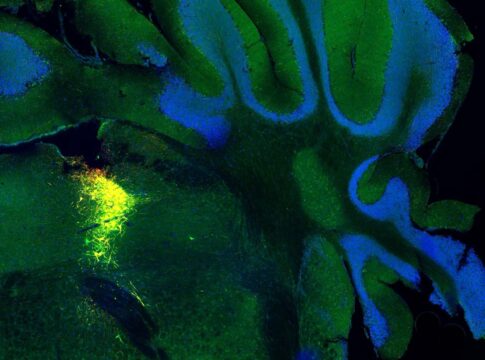
Décoder les ondes de l’activité cérébrale
Comment nous avons identifié le mécanisme
Nous avons utilisé une technique appelée « optogénétique », qui utilise des impulsions lumineuses pour activer sélectivement le locus...